20 December 2025, 20:00
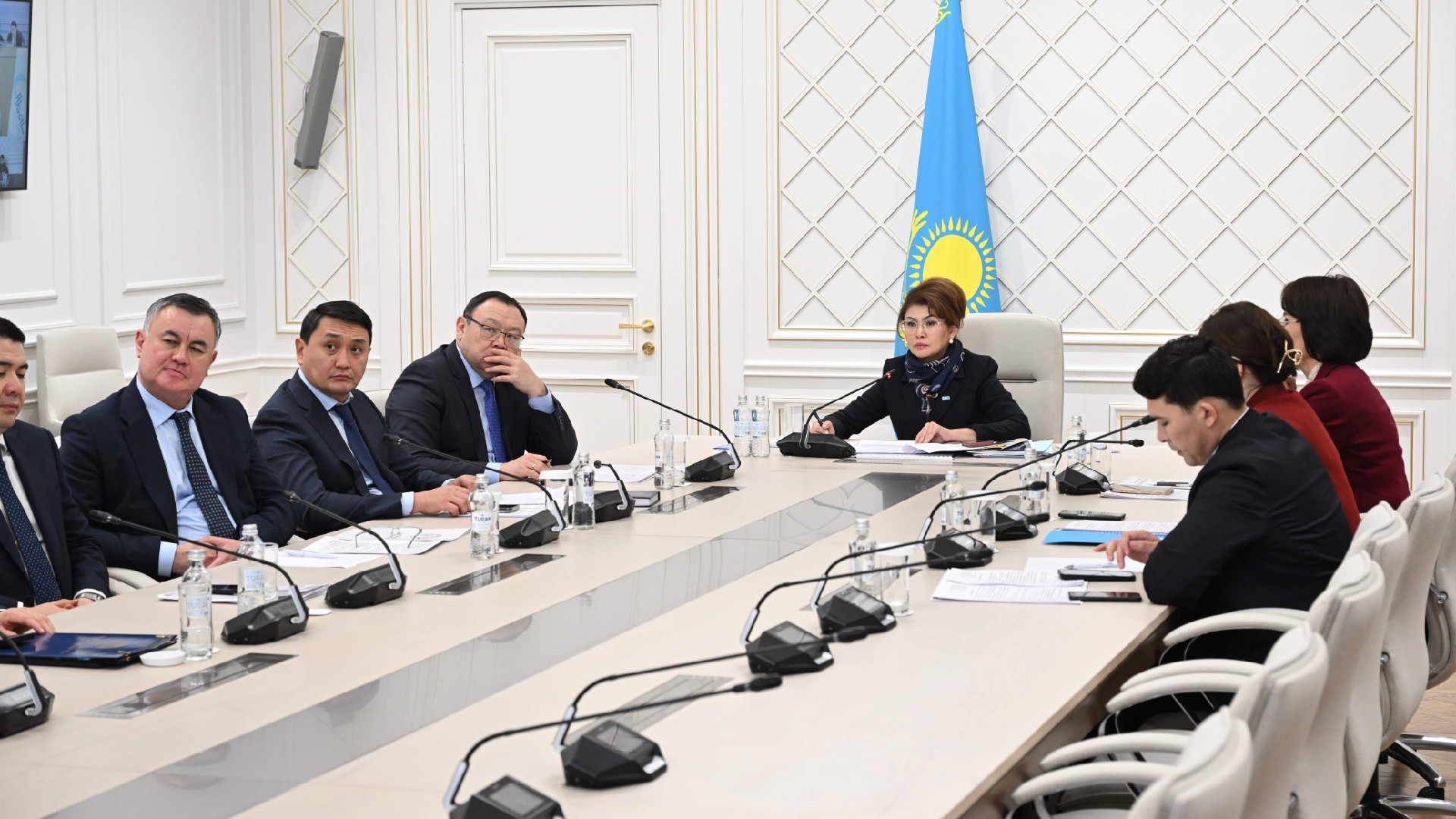 Meetings on the development of the city’s social sector were held in Almaty under the chairmanship of Deputy Prime Minister – Minister of Culture and Information Aida Balayeva.
As part of the working trip, issues related to the development of the education system, healthcare, and social protection of the population were reviewed, as well as the introduction of digital solutions and the improvement of process management in the social sphere. The Deputy Prime Minister emphasized that high-quality implementation of the tasks set by the Head of State requires close interaction between central and local executive bodies, as well as the development of joint comprehensive plans for each area of social policy.
The central event of the working trip was a meeting with the city’s public activists, attended by Akim of Almaty Darkhan Satybaldy. During the meeting, reports were delivered by the Ministers of Healthcare, Education, Tourism and Sports, as well as Deputy Ministers of Labor and Social Protection of the Population, and Science and Higher Education. The Deputy Prime Minister was presented with the results of a comprehensive analysis of the social sector of the мегаполис, key problems and issues were outlined, and possible systemic solutions were proposed.
In addition, the system of preschool and secondary education in the city was reviewed, where a number of problems related to staffing and quality of management persist. According to Minister of Education Zhuldyz Suleimenova, 1,065 preschool organizations operate in Almaty, of which 866 are private. Total coverage is about 86 thousand children. At the same time, the staff shortage exceeds 2 thousand teachers, more than 90% of whom are in the private sector. In the school network, the annual increase in the number of students ranges from 10 to 13 thousand people, while the shortage of student places exceeds 27 thousand.
Special attention was paid to the results of digitalization. The introduction of individual digital solutions made it possible to identify significant violations in the organization of the educational process in private kindergartens and schools, including false reporting and so-called “ghost students.” Seven private schools were not allowed to place a state educational order.
In this regard, Aida Balayeva emphasized that digitalization is a necessary tool for restoring order and optimizing processes.
“Kazakhstan must become a digital state. Digitalization and the use of artificial intelligence bring both challenges and obvious advantages, and we are obliged to use these advantages. First of all, to optimize processes. Even the introduction of individual digital solutions has shown the scale of the problem of ‘ghost students’ in preschool and secondary education. We are not inclined to accuse everyone, but there are managers who undermine the system and the teaching profession as a whole,” the Deputy Prime Minister noted.
She also emphasized the interconnection of all levels of education, highlighting the educational role of schools and the need for systematic work to implement the ideological platforms of the Head of State, including the principles of “Fair Kazakhstan” and the “Taza Kazakhstan” initiatives.
According to Vice Minister of Science and Higher Education Gulzat Kobenova, 236 thousand students study in Almaty, which accounts for about one third of all students in the country. By 2032, the annual increase in applicants may reach 23–24 thousand people, which requires advanced development of infrastructure and closer cooperation with universities.
A separate emphasis was placed on the system of technical and vocational education. In many colleges, there remains a shortage of modern infrastructure and a lack of clear understanding of the demand for certain specialties. It was noted that some professions are already losing relevance, especially in the context of the development of artificial intelligence.
In the city’s healthcare system, key issues remain staffing, the condition of infrastructure, and the quality of services provided. These problems were outlined in the information presented by Minister of Healthcare Akmaral Alnazarova.
In Almaty, 418 medical organizations operate, while the staff shortage exceeds 1.1 thousand specialists, including more than 400 doctors. The level of population coverage by the compulsory social health insurance system is 80.3%, and the number of uninsured and irregularly insured citizens exceeds 460 thousand people.
Special attention was paid to the work of primary healthcare. It was noted that more than 4 million attached citizens nationwide have not visited clinics over the past two years, which requires a revision of approaches to prevention and dispensary monitoring.
“There must be detailed analytics for each medical institution. Almaty will be under special control. Nearly 3 million people live in the city, and every medical institution is obliged to provide services with high quality. Digitalization of the healthcare system is necessary to eliminate false reporting and distortion of data. A superficial approach must be stopped,” Aida Balayeva emphasized.
The Deputy Prime Minister also noted that the outpatient care sector should play a key role in forming a responsible and conscious attitude of citizens toward their own health.
Issues of transparency and targeting of social support were discussed in a separate block. According to First Vice Minister of Labor and Social Protection of the Population Askarbek Yertayev, as a result of digital data matching in Almaty, unjustified receipt of targeted social assistance by 10 thousand families was prevented.
At the same time, Aida Balayeva drew attention to the need to build an open dialogue with society and conduct consistent information and explanatory work, noting that compliance with the law and uniform rules for all are basic principles of a fair and legal state.
Special attention during the working trip was paid to the development of science and higher education. During a meeting with academicians of the National Academy of Sciences under the President of the Republic of Kazakhstan, it was noted that despite having special status and institutional opportunities, the Academy’s potential is not fully utilized and requires a rethinking of its role in the system of public administration and the economy.
In this regard, President of the National Academy of Sciences Akhylbek Kurishbayev noted that the current model of scientific priorities leads to fragmentation of resources and does not ensure concentration of efforts on key areas. At the same time, in 2024–2025, the Academy conducted 70 regional and sectoral foresight sessions with the participation of the state, business, and foreign scientists. As a result, 220 promising tasks were identified and 65 scientific and technical assignments were formed, oriented toward real needs of the economy.
It was also emphasized that the development of science is impossible without a systemic link with higher education. During a meeting with university rectors and heads of research institutes, it was noted that despite the concentration of significant scientific and human resources in Almaty, a gap remains between university science and the needs of the economy.
In this regard, Rector of Al-Farabi Kazakh National University Zhanseit Tuymebayev noted that the university currently operates 8 research institutes, 39 research centers, and more than 140 laboratories, implementing about 400 scientific projects. According to him, the key task of university science is to accelerate the transfer of developments into the economy and work in close cooperation with the state and business.
As Deputy Minister of Science and Higher Education Gulzat Kobenova noted, the key task remains building sustainable interaction between universities, scientific organizations, and regions. Personnel training, applied research, and technological development must operate within a unified logic oriented toward the real needs of the country.
As part of the working trip to Almaty, the Deputy Prime Minister outlined a number of specific tasks.
In the education sector, it was поручено to conduct a large-scale survey to form an objective picture of the staffing structure, prepare a clear plan to improve the quality of education, strengthen work in primary education and the college system, and develop a phased plan for the introduction of artificial intelligence with training of teachers and designation of those responsible for digitalization.
In the healthcare sector, the task was set to prepare detailed analytics for each medical institution, complete the certification of facilities, and strengthen control over digital recording of medical services. It was also instructed to intensify information and explanatory work and open dialogue with the population, with an emphasis on increasing responsibility and awareness of citizens in matters of health preservation.
In terms of science and higher education, the need to move from fragmented initiatives to systematic work was emphasized. Priority tasks include refining a new model of scientific priorities, strengthening the role of the National Academy of Sciences as an expert and analytical center, and intensifying the participation of universities and research institutes in the implementation of applied projects aimed at regional development.
In the field of social protection, it was instructed to continue work on digital data matching and ensuring the targeted nature of support measures. The need for systematic support of social assistance measures and clarification of their conditions for the population was also emphasized.



Stay updated about the events of the Prime minister and the Government of Kazakhstan - subscribe to the official Telegram channel
Subscribe