05 June 2026, 13:50
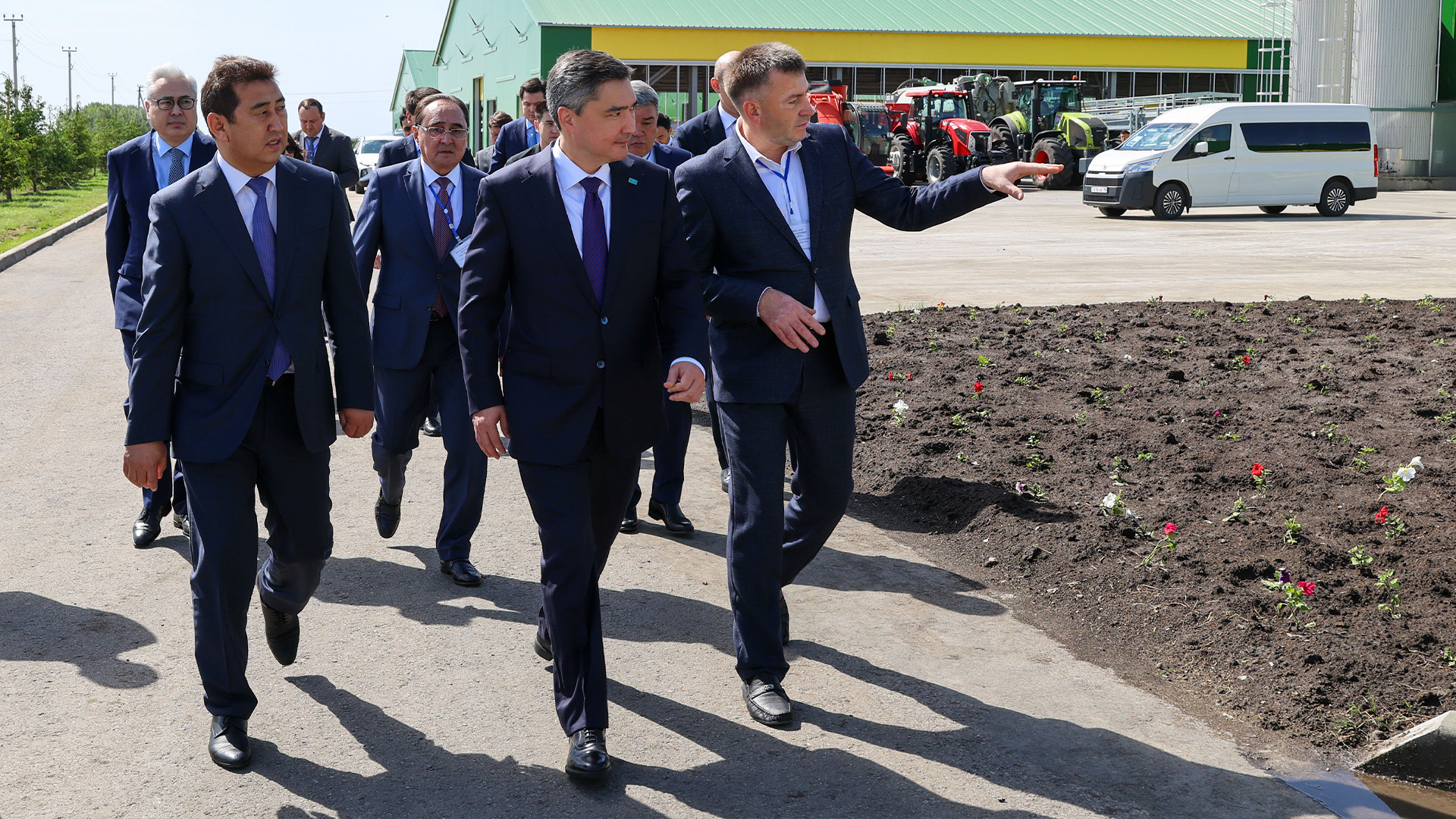 Prime Minister Olzhas Bektenov, during his working visit to North Kazakhstan Region, inspected the progress of implementing the President’s instructions on the development of the agro-industrial complex, increasing agricultural productivity, and deepening the processing of domestic products. In particular, he visited the digital dairy farm of LLP “Atameken-Agro-Korneevka”, the farm of LLP “Kyzylzhar Zhem”, and the milk processing plant of LLP “Eurasian Milk”.
Today, North Kazakhstan Region ranks first among organized farms in milk production and accounts for about one-sixth of the national volume of its processing.
In the village of Korneevka, Esil District, Olzhas Bektenov familiarized himself with the operations of the modern digital dairy farm of LLP “Atameken-Agro-Korneevka”. The director of the enterprise, Alexander Fadeyev, reported that the farm maintains 2,500 head of dairy cattle, including over 1,300 cows. The Holstein-Friesian herd was imported from Hungary, Germany, Denmark, and the Netherlands. The first 300 head from Germany, adapted to Kazakhstani winter conditions, will be sold to agricultural producers this autumn.
Olzhas Bektenov inspected the automated milking parlor for 40 cows produced by the German company Westfalia, as well as digital systems for herd and production process management. The farm uses DairyPlan and CowScout solutions, which allow for automated recording of milk yields, equipment performance monitoring, and tracking of animal condition, activity, and productivity. In 2025, the farm produced about 11,000 tons of milk. Since the beginning of this year, production volume has reached approximately 3,000 tons.
First Deputy Akim of North Kazakhstan Region Marat Tasmagambetov reported on the implementation of the Comprehensive Plan for Livestock Development. The region operates 118 dairy farms and 9 poultry farms, including 6 egg-producing farms with a capacity of over 600 million eggs per year. In 2025, the gross output of livestock products amounted to 208 billion tenge, with a growth of 6%. Meat production reached 82,000 tons, milk — 382,000 tons, and eggs — 631 million pieces.
The Prime Minister noted that the Head of State pays special attention to support measures for farmers. The development of dairy farms corresponds to the President’s task of increasing the share of processed products in the agro-industrial complex to 70%. Such projects strengthen food security, expand the raw material base for processing, and create permanent employment in rural areas.
Olzhas Bektenov drew the attention of the regional leadership and the Ministry of Agriculture to veterinary safety. On the instruction of the President, since 2024 the veterinary sector has received the necessary funding for systemic development for the first time in the last 14 years. Over the past two years, about 600 veterinary facilities have been built nationwide at a cost of 9.1 billion tenge.
“At present, the epizootic situation remains favorable. Over the past three years, we have achieved a 12-fold reduction in brucellosis cases and a reduction in unfavorable points by 7. The number of sudden disease outbreaks has been minimized. All conditions for this have been created. This year, 1.8 billion tenge has been allocated from the republican budget for the construction of 57 veterinary stations and 2 veterinary laboratories. The construction of veterinary stations provides substantial support for the veterinary well-being of personal subsidiary plots, where the full range of veterinary procedures is carried out,” Marat Tasmagambetov reported.
Reference: In total, 373 dairy farms operate in the country with a combined production volume of about 1 million tons of milk per year. In execution of the instruction of the Head of State given in the Address to the People of Kazakhstan, the construction of 116 modern dairy farms with a total production volume of about 600 thousand tons of milk per year is planned. 71 farms have already been commissioned. By the end of this year, it is planned to complete the construction of another 19 farms.
On the introduction of digital solutions aimed at regional development and the implementation of the Digital Aimaq project, the head of the apparatus of the Akim of North Kazakhstan Region, Ruslan Alishev, reported. Currently, 10 district and 3 rural creative IT centers operate in the region, providing rural residents with access to modern technologies and digitalization opportunities. By the end of the year, it is planned to launch another 11 such centers in the villages of the region.
More than 3,000 people have been trained in digital skills at the SKO Hub and Qyzylzhar Creative Center platforms, over 400 events have been held, 30 startups have been created, and investments are being attracted. The issue of expanding this work within the framework of a similar Chinese “Digital Village” project is being considered.
Ruslan Alishev also reported on plans to create the Digital Qyzylzhar IT Park. This will provide conditions for the growth of regional IT companies, form a single coordination center for the regional Digital Aimaq project, and accelerate the digital transformation of key sectors of the regional economy.
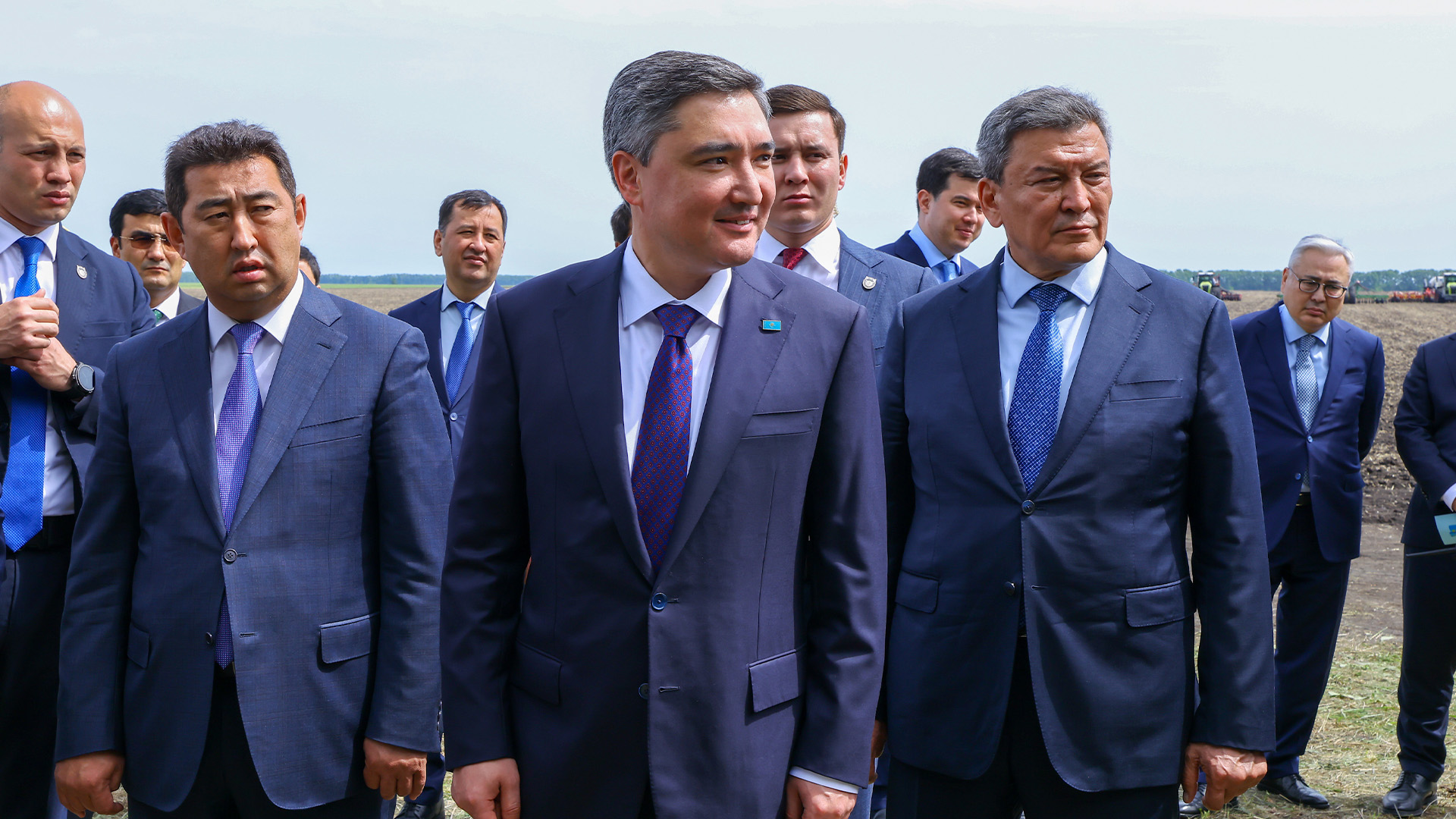
At the site of LLP “Kyzylzhar Zhem”, the Prime Minister reviewed the results of sowing and inspected a field with an ultra-early variety of grain crops. The enterprise specializes in mixed agriculture.
The director of the enterprise, Daniyar Anafin, reported that soft spring wheat variety Calixo of French selection by Secobra Recherches S.A. is planned to be sown on the experimental field. The variety is early-maturing, with a vegetation period of 85 days, and has high yield potential. Previously, Calixo has successfully proven itself in regions of Western Siberia with soil and climatic conditions similar to those of North Kazakhstan Region. It was noted that in favorable years, the yield of the variety reached 60 centners per hectare. In terms of economic efficiency, the variety is capable of competing with a number of high-margin crops, making it promising for further introduction into agricultural production in North Kazakhstan Region. The cultivation of early-maturing wheat will be accompanied by the North Kazakhstan Agricultural Experimental Station.
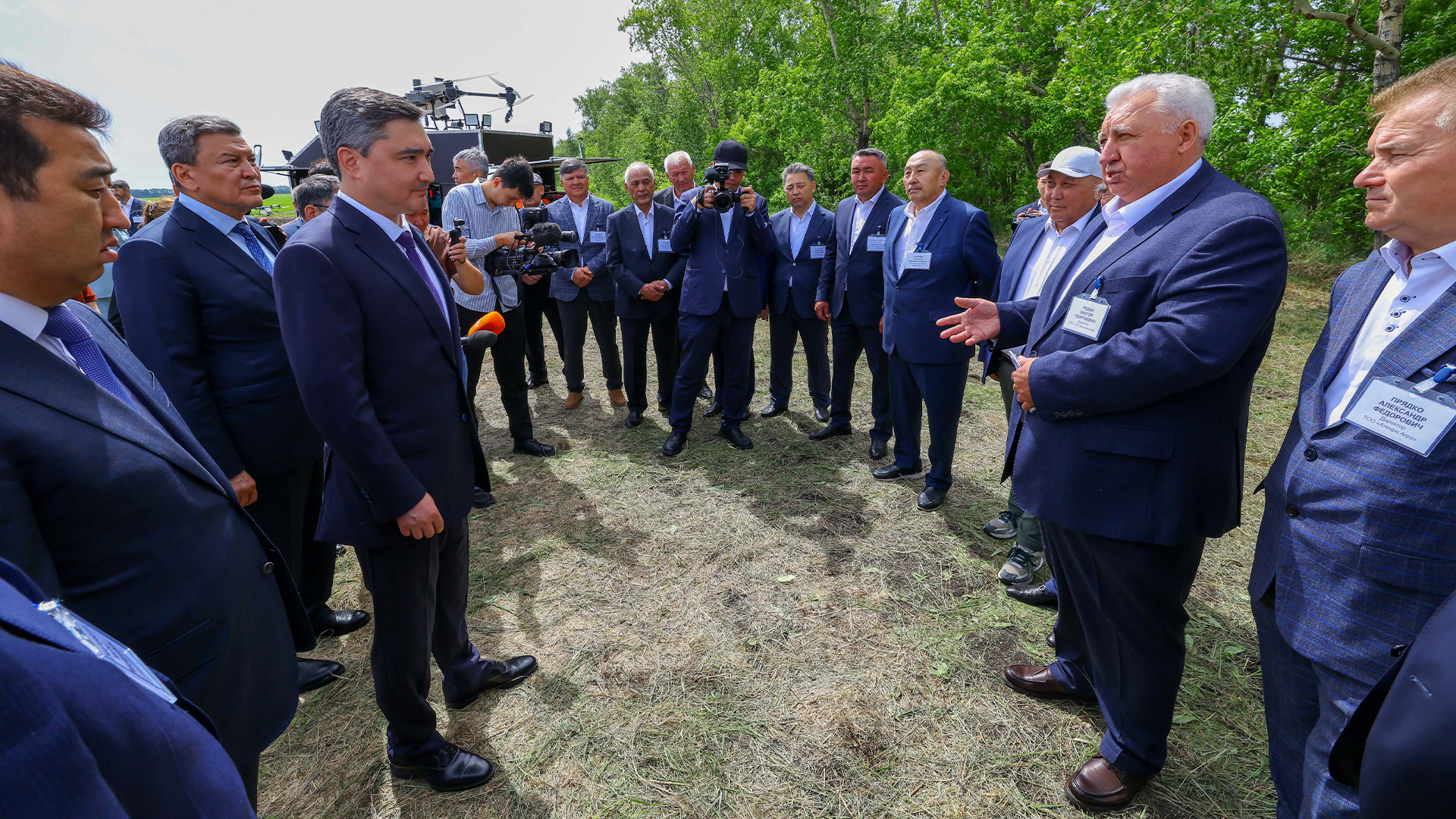
A meeting with local agricultural producers was also held there. Olzhas Bektenov congratulated the farmers on the completion of the sowing campaign. Kazakhstan is among the top ten largest wheat exporters in the world and maintains a leading position in the global flour market.
“On the instruction of the President, massive support for the agricultural sector has been provided for the third year. This year, the total financing of crop production and livestock farming reached 1.2 trillion tenge. We see the return: the last two years had good harvests. Our grain is exported to 70 countries of the world. We are among the top ten global suppliers. This is the result of the policy of the Head of State Kassym-Jomart Tokayev, who pays close attention to the development of the industry, and, of course, the daily work of farmers. We will continue this work,” Olzhas Bektenov emphasized.
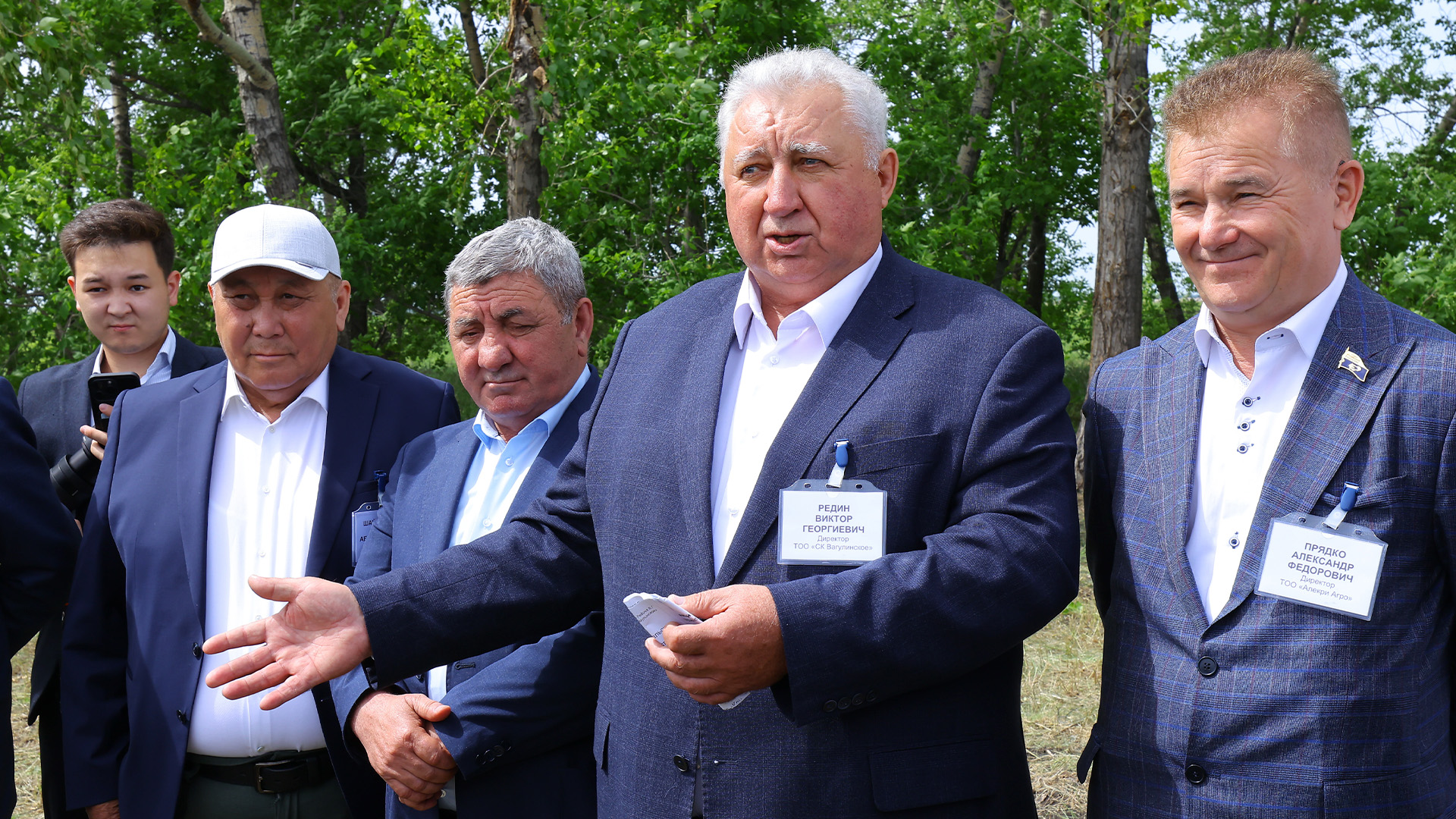
“The “Ken Dala-2” program supported us. Today we have the right to plan financing, there is confidence in the timely receipt of funds — this is very good. There were years when we did not know whether there would be fertilizer or if it would arrive on time. Today we receive fertilizers steadily. In recent years, issues with diesel fuel have been resolved; we practically do not face any problems. For this, we express sincere gratitude to the President. Our task is to ensure a good harvest so that our territories develop and the well-being of the population of Kazakhstan increases. At the same time, the wages of our machine operators are not inferior to the level of payment in the city,” Viktor Redin, Director of LLP “SK Vagulinskoe”, said.
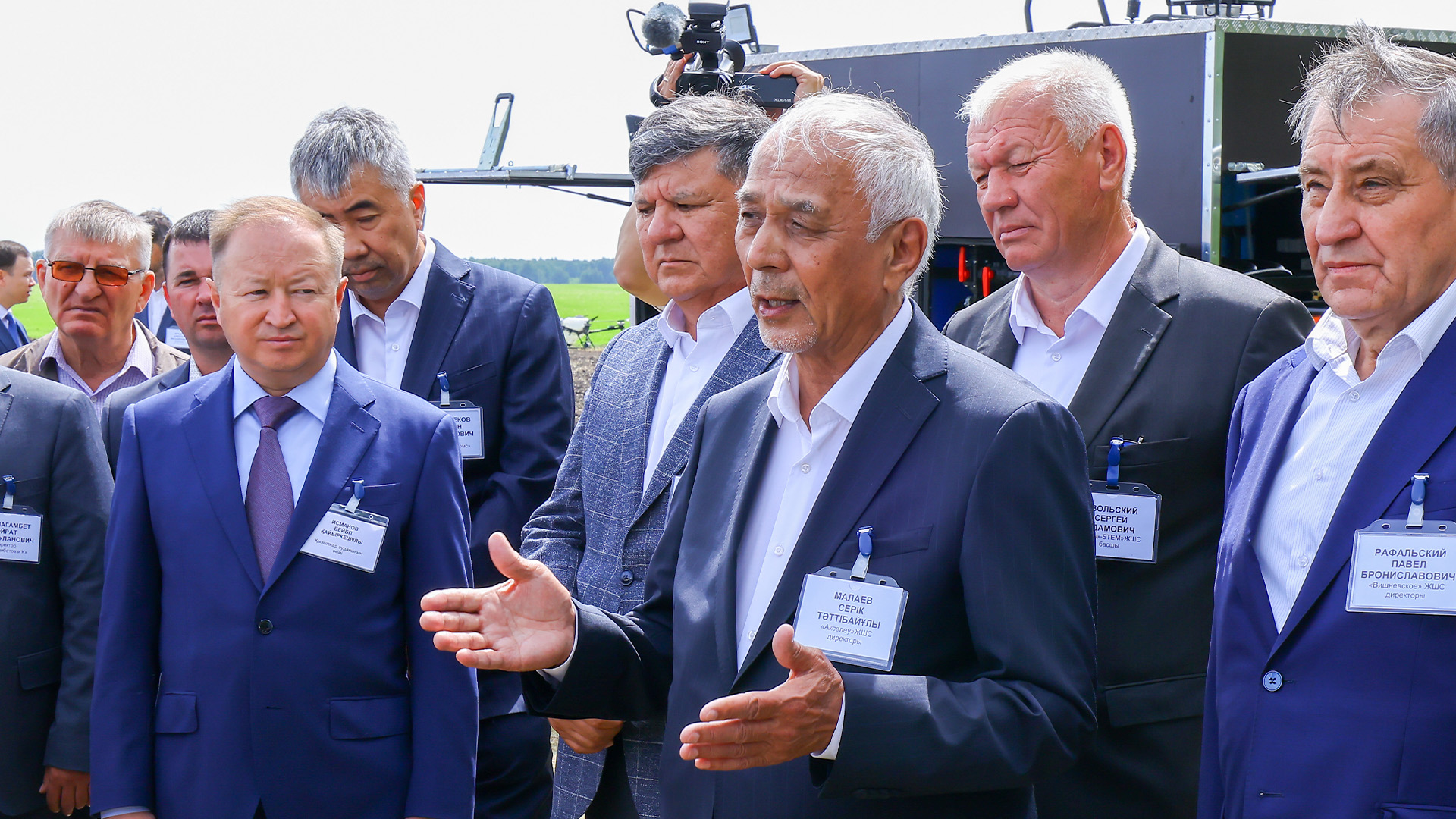
The director of LLP “Akseleu”, Serik Malaev, noted that state support measures played an important role in carrying out field work. Farmers timely received preferential loans at 5%, access to subsidized mineral fertilizers, and the necessary volumes of fuels and lubricants. This allowed all agrotechnological measures to be carried out on time and in compliance with the necessary requirements. The importance of digitalization of production processes was separately noted.
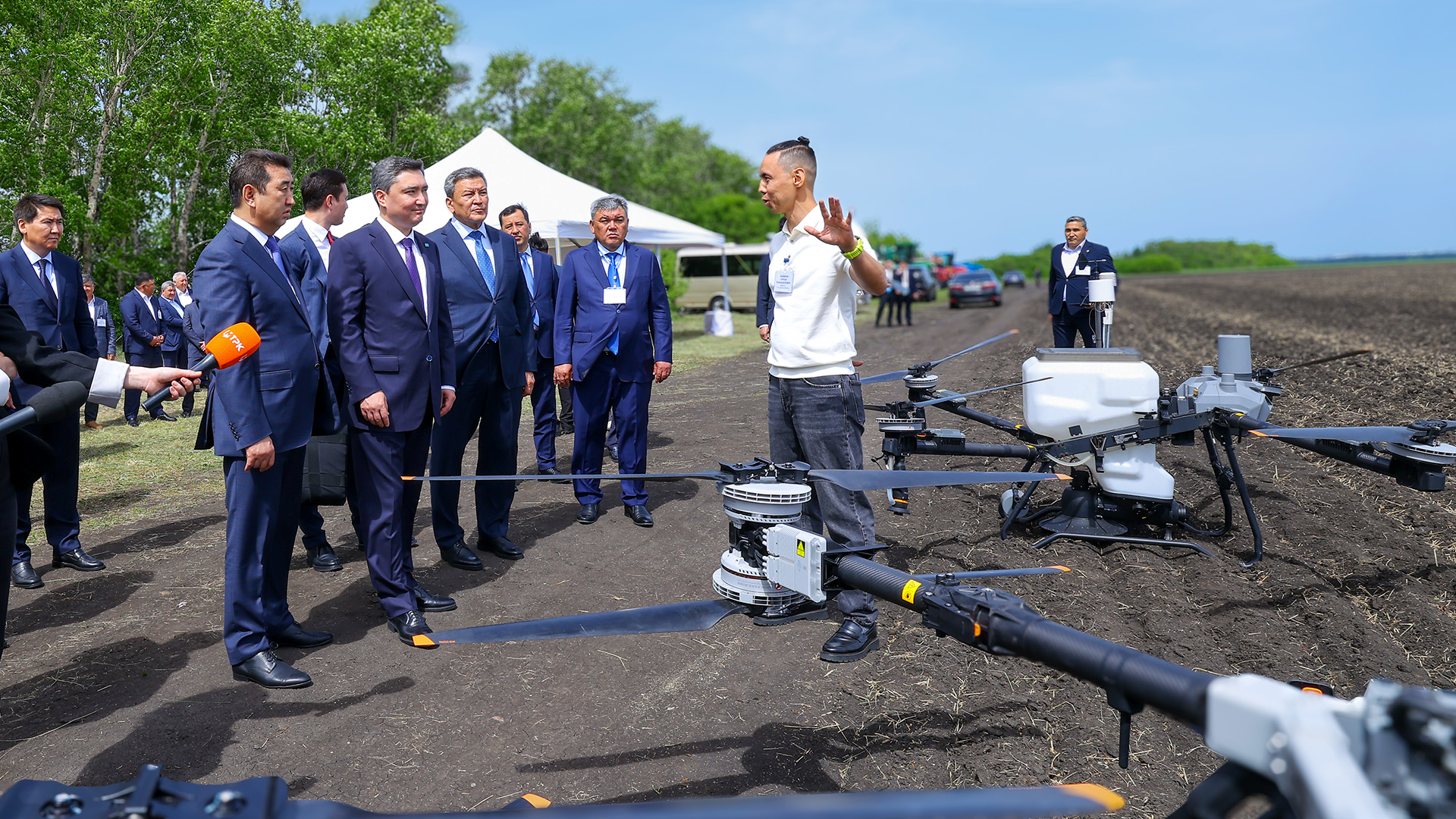
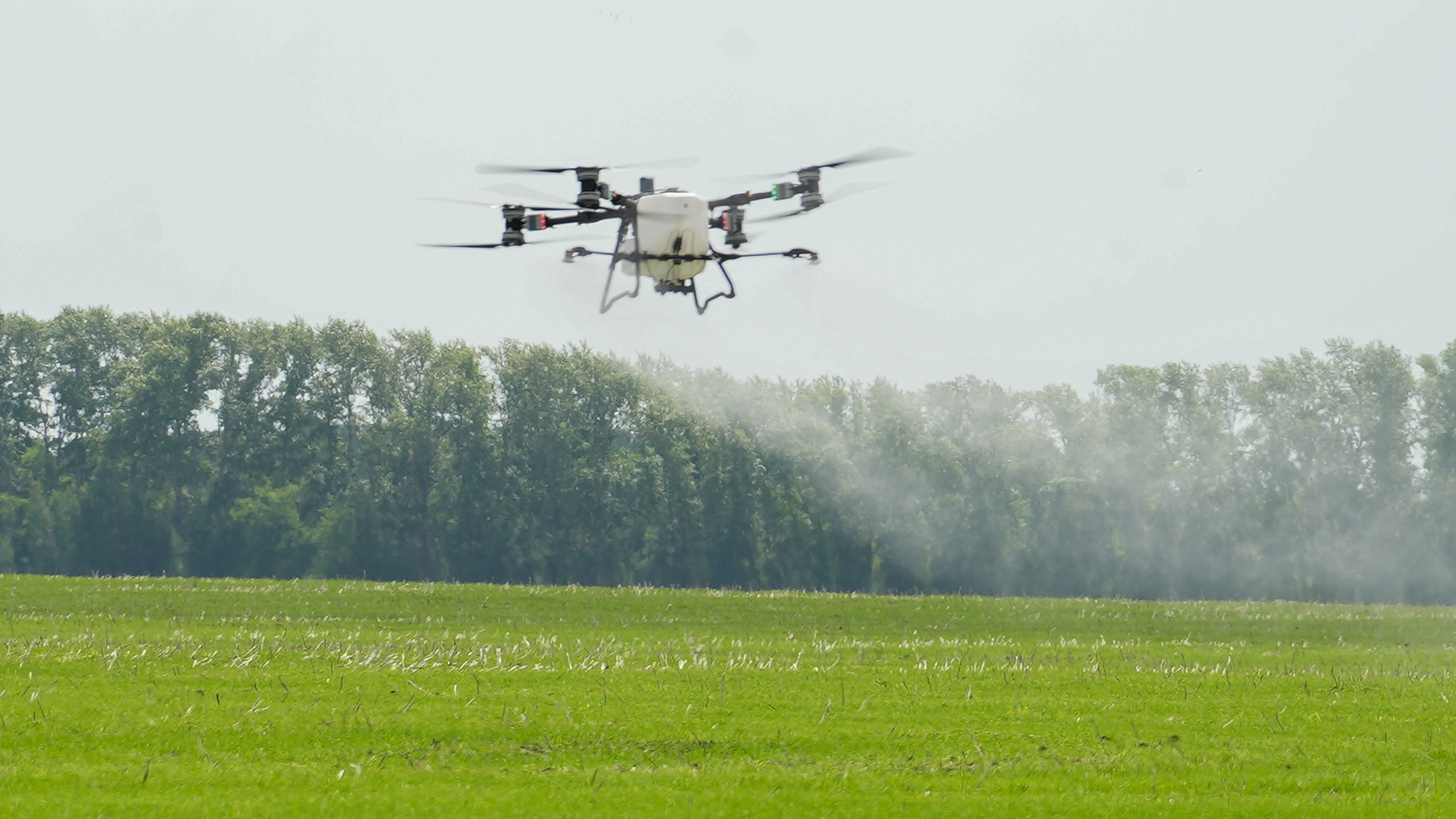
The industry faces the task of increasing the profitability of every hectare through modern technologies and the production of high value-added products. The Prime Minister familiarized himself with digital solutions used in the agro-industrial complex, including unmanned aerial vehicles, weather stations, and soil analyzers. Their use allows for more accurate assessment of crop conditions, planning of agrotechnical works, and increasing the efficiency of agricultural production. Overall, a high level of diversification of sown areas has been achieved in the region: about a quarter of all oilseed crops in the country are grown precisely in North Kazakhstan Region.
The project for the construction of a granulated alfalfa production plant was also presented. The project is aimed at developing the feed base and providing livestock farms with high-quality feeds with high nutritional value. The general director of the Etalon Agro group of companies, Medet Tulegenov, emphasized that an important condition for the successful implementation of the project is the development of irrigated agriculture, which will allow obtaining two to three cuttings of alfalfa per season, ensuring stable raw material quality and uniform loading of production capacities. For year-round operation of the plant, an additional direction is also being worked out — the production of biofuel from granulated flax and wheat straw.
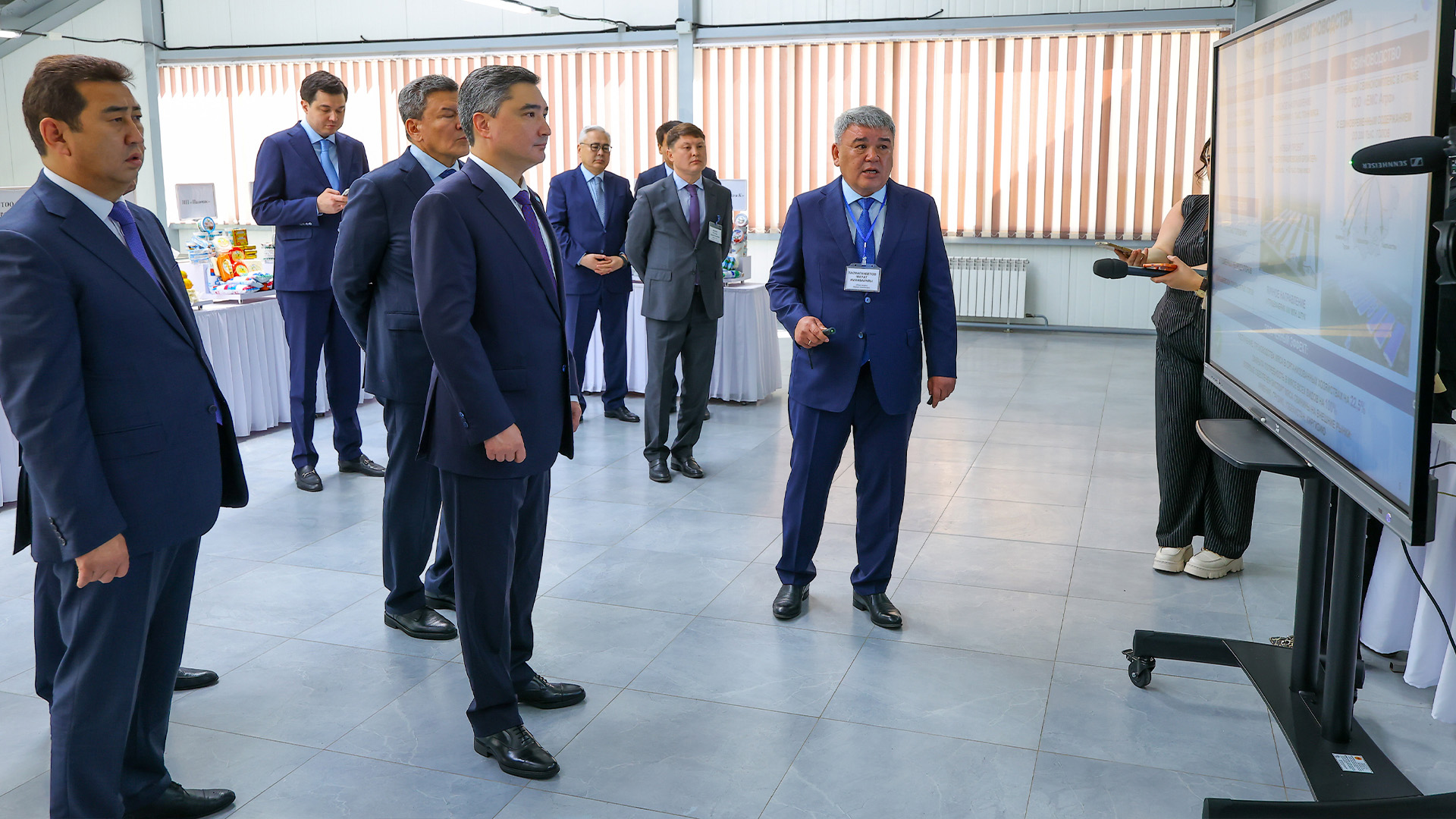
In Petropavlovsk, the Prime Minister visited the milk processing plant of LLP “Eurasian Milk”, where he inspected the technological process and the range of finished products. Director Andrey Gritsenko reported that the enterprise operates using Swiss technologies, is focused on the production of high value-added products, import substitution, and the development of export potential. The plant processes Kazakh raw materials supplied by farms in the region. It produces over 7,000 tons of hard and soft stretched cheeses, more than 12,000 tons of butter and about 12,000 tons of condensed milk per year, as well as more than 20,000 tons of whey concentrate and fermented milk products. By the end of 2026, the launch of a new product — cream cheese with a capacity of more than 6,000 tons per year — is planned. In total, the enterprise produces 24 items. The products are supplied to the domestic market and exported to Russia, Azerbaijan, and Kyrgyzstan.
At the current stage, production is loaded at 50% of design capacity. In this regard, the Prime Minister instructed the Ministry of Agriculture, together with the akimat, to provide all possible support measures for the earliest possible full-capacity launch of the enterprise.
Following the visit to the facilities, the Prime Minister instructed the Ministry of Agriculture, together with the regional akimat, to continue supporting farmers for the development of processing, feed production, and digitalization of the agro-industrial complex, ensure the timely launch of new dairy farms, and promote domestic products in the market.



Stay updated about the events of the Prime minister and the Government of Kazakhstan - subscribe to the official Telegram channel
Subscribe