05 October 2026, 09:30
 Over the past three years, Kazakhstan's transport and logistics system has reached a qualitatively new level of development, ensuring the solid integration of regions, strengthening transit potential, and improving population mobility. As part of executing the directive of Head of State Kassym-Jomart Tokayev on developing regional transport connectivity—delivered in the Address to the People of Kazakhstan, "Kazakhstan in the Era of Artificial Intelligence: Current Tasks and Their Solutions Through Digital Transformation"—the Government is implementing a comprehensive set of measures to modernize road, rail, aviation, and maritime infrastructure, as well as to develop logistics routes.
Major investments, the elimination of key infrastructure gaps, and the implementation of advanced digital solutions have reduced travel times, enhanced the safety and comfort of passenger transport, and accelerated the flow of freight along key international corridors.
19.1 Thousand Km of Highways Built and Repaired in Kazakhstan Over Three Years
The primary focus in developing road infrastructure has been placed on expanding the road network, increasing the capacity of key routes, and improving transport connections between regional centers, districts, and remote settlements. Between 2023 and 2025, a total of 19.1 thousand km of roads were constructed, reconstructed, and repaired, including:
In 2026, the scale of work remains at a high level: construction, reconstruction, and repairs encompass more than 11 thousand km of highways, of which 3.4 thousand km account for the construction and reconstruction of the national network, 5 thousand km for capital and medium repairs of national highways, and 2.4 thousand km for local road repairs.
According to the Bureau of National Statistics, passenger traffic by road transport was as follows:
The issue of transport accessibility in rural areas is being addressed through the development of the local road network. Between 2023 and 2025, work was completed on 10.2 thousand km of roads, including 556 km of new roads, providing year-round connections with district and regional centers.
Over the past three years, the share of roads meeting standard technical condition has grown steadily. For example, across the national network, the proportion of roads in standard condition will increase from 92% in 2023 to 95% by the end of 2026. Across the local network, the indicator will increase from 86% in 2023 to 92%.
Overall, through 2029, it is planned to bring 97% of national highways and 94% of local roads to standard condition.
Highway Development Expands Transport Links Between Regions
Enhanced regional transport connectivity is achieved through major road projects designed to reduce travel times and expand opportunities for interregional and transit routes. One of the key projects is the 896-km "Center – West" route, which involves the construction and reconstruction of a highway connecting Astana via Arkalyk and the village of Yrgyz with western regions. Work is also underway on the Beyneu – Sekseul, Kyzylorda – Sekseul, and Ulgaisyn – Sekseul sections.
Reconstruction continues on key highways: Kyzylorda – Zhezkazgan, Aktobe – Ulgaisyn, and Zhezkazgan – Karaganda.
A series of major road reconstruction projects were completed between 2023 and 2025. In 2023, the Kandagash – Makat (359 km) and Usharal – Dostyk (180 km) highways were commissioned.
In 2024, reconstruction was completed on the Karaganda – Almaty (946 km), Taldykorgan – Oskemen (768 km), Aktobe – Kandagash (96 km), Atyrau – Astrakhan (277 km), and Merke – Burylbaital (262 km) sections.
In 2025, work was completed on the Uzynagash – Otar (42 km), Kalbatau – Maikapshagai (405 km), Podstepnoye – Fedorovka (72 km), Kurti – Konayev (67 km) sections, as well as 192 km of the Kyzylorda – Zhezkazgan highway.
Upgrading technical categories and road surface quality increases average travel speeds and reduces travel times between regional and district centers. For instance, in 2026 in the West Kazakhstan Region, reconstruction and capital repair were completed on 245 km of highways connecting the Kaztalov, Zhanibek, and Bokey Orda districts with the regional center. Asphalt paving was laid on these sections for the first time. For 54,000 residents of adjacent settlements, travel time to Uralsk was cut by more than half—from 12–14 hours down to 5–6 hours.
In addition, bypasses around the largest cities—Saryagash, Kyzylorda, Atyrau, Rudny, and Petropavl—will be constructed by 2029 to increase road capacity, reduce transit traffic time, and relieve city road networks. Plans also include reconstructing the road to Rakhmanov Springs and constructing a bridge over the Irtysh River to improve transport accessibility for specific areas and ensure reliable interregional communication.
Rail Transport and Rolling Stock
Scale projects for constructing new railway lines are actively underway across the country. Over the past five years, 911 kilometers of new track have been laid in Kazakhstan. Work continues today: the construction of another 800 kilometers of railways is underway, along with the modernization of approximately 2.6 thousand kilometers of existing track.
In 2023–2025, rail transport carried a combined total of 60.2 million passengers. Since the beginning of 2026, trains operated by JSC "Passenger Transportation" alone have served 7.5 million people, with the highest passenger traffic recorded from Almaty, Astana, Shymkent, as well as the Abai, Aktobe, Karaganda, Kyzylorda, and Zhambyl regions.
Social and specialized services continue to expand on rail transport: women-only carriages now operate on 13 routes and have carried 946,000 female passengers since launch. For persons with disabilities and their companions, a 50% fare discount is provided on socially significant routes—396,000 tickets were issued for specialized seats during the first seven months of 2026.
Civil Aviation: Transport Accessibility and Regional Air Travel
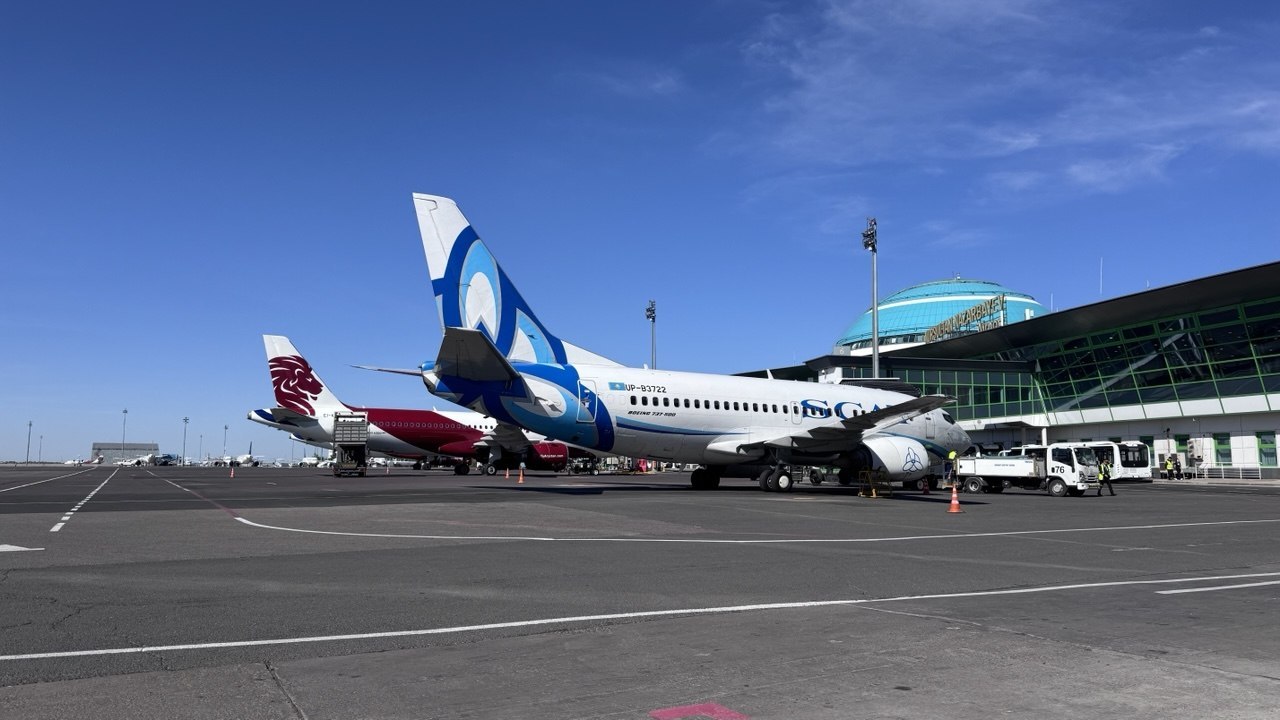
Large-scale modernization of airport infrastructure continues. In 2026, the Arkalyk Airport was restored, resuming air links with Astana, Almaty, and Kostanay. The runway at Pavlodar Airport was also modernized. By the end of the year, construction of new air hubs in Zaysan, Katon-Karagai, and the Kenderli resort zone is scheduled for completion.
Through 2029, runway construction and reconstruction are planned in Astana, Almaty, Shymkent, Taraz, Aktobe, Uralsk, and Zhezkazgan, along with terminal upgrades at the country's major airports. The implementation of these projects will increase airport capacity, improve passenger service quality, and create conditions for developing modern aviation hubs.
The domestic air route network is systematically expanding. While in 2023 flights operated on 51 routes with a frequency of 630 flights per week, and in 2024 on 57 destinations with 669 flights, by 2025 there were 821 weekly flights across 60 routes. As of September 2026, domestic air communication encompasses approximately 60 routes with a frequency of 890 flights per week.
In civil aviation, the regional flight network is broadening: in 2026, additional flights were organized from Astana to Almaty, Aktau, Aktobe, and Urzhar, as well as from Almaty to Aktau and Urzhar. Following the restoration of Arkalyk Airport on August 22, 2026, subsidized flights were opened from Astana, Almaty, and Kostanay (two flights per week). A flight from Astana to Arkalyk takes about 40 minutes.
Digitalization, Logistics, and Practical Impact
To enhance regional connectivity and transit potential, digital technologies are being actively implemented. Direct interregional flights have eliminated the need for layovers at major hubs, while duty-free status for cargo aircraft for 12 years and simplified export procedures for specific categories of goods (including aviation goods) to CIS countries have been introduced to support air cargo transport.
In rail transport, an "Online Train Tracking Board" service based on GPS trackers was launched for real-time train monitoring. A large-scale project was also deployed to equip passenger trains with OneWeb and Starlink satellite internet offering speeds up to 100 Mbps in remote areas, providing passengers with a free basic package for instant messaging.
Along the Trans-Caspian International Transport Route (TITR), the "Digital Trade Corridor" IT platform was deployed, integrating the railway systems of Kazakhstan, Azerbaijan, and Georgia into a "single window" system. The "Tez Customs" module enabled paperless transit customs clearance, reducing customs processing times from 8 hours down to 30 minutes. As a result of these comprehensive measures, cargo delivery times along the TITR have been reduced from 38 days to 13–17 days, with a target goal of achieving a stable 10–12 days from China to ports in Georgia and Turkey.
#Civil aviation #Digitalization #Highways #Infrastructural development #Logistics #President's instruction #Regions #Transport



Stay updated about the events of the Prime minister and the Government of Kazakhstan - subscribe to the official Telegram channel
Subscribe