15 January 2026, 21:21
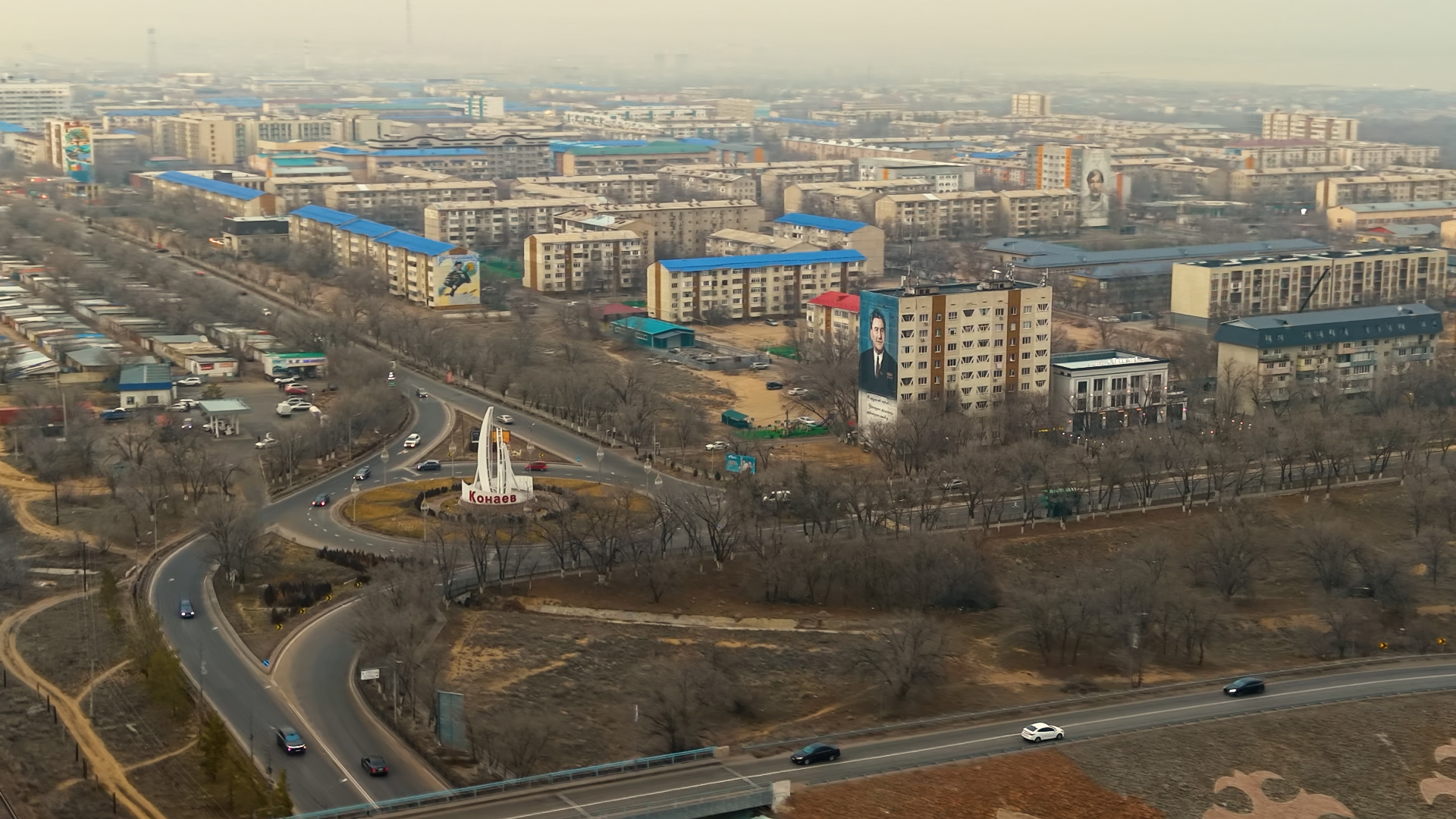
In accordance with the instructions of the President of the Republic of Kazakhstan and within the framework of the Government’s systematic work, the development of Almaty Region in 2025 was focused on improving public welfare and strengthening the region’s economic potential. A key emphasis was placed on job creation and comprehensive infrastructure modernization, primarily in rural areas, where more than 80% of the region’s population resides.
By the end of the year, the physical volume index of the regional economy reached 110.6%, indicating steady growth across all major sectors.
One of the strategic objectives set by the Head of State was the development of the new city of Alatau as an international industrial and business hub. The implementation of this project is providing a powerful impetus to the development of the industrial potential of the entire region.
By the end of 2025, industrial output increased by 10.1%, reaching 2.6 trillion tenge. Almaty Region confidently maintains first place nationwide in food production. At the same time, the non-resource sector of the economy is also developing.
Among the year’s significant projects were the expansion of capacities at Galanz Bottlers, as well as the launch of an aluminum radiator manufacturing plant by SL Group LLP in Karasai District. Investment in the project amounted to 7.3 billion tenge, 100 permanent jobs were created, and import substitution of products was ensured.
As noted by Deputy Akim of Almaty Region Rustam Isatayev, a pool of 32 key investment projects has been formed in Alatau City.
In accordance with the approved development concept, 25 of these projects are distributed across four clusters: industrial and food, logistics, tourism, and academic and pharmaceutical. A strategically important step was the allocation of a land plot to the international conglomerate Hanteng BioPharma for the creation of a large-scale pharmaceutical cluster.
The agro-industrial complex remains the key sector of the economy and the largest employer in the region. Its efficiency reached record levels: for every tenge of budget subsidies, 17 tenge of gross output was produced.
Gross agricultural output amounted to 798.4 billion tenge. The region leads the country in ice cream production (63% of national output) and also holds leading positions in the production of beverages, corn, and apples.
In 2025, 148 billion tenge in investments were attracted to the agro-industrial complex. Modern agrotechnologies are being actively introduced: the area of land using water-saving irrigation increased 3.3 times and exceeded 66 thousand hectares. This allows the region to maintain leadership in the cultivation of corn, apples, and soybeans.
Almaty Region provides 28.7% of the country’s total poultry meat production and ranks second nationwide in overall meat production at 133.9 thousand tonnes.
The complex of projects being implemented in Almaty Region functions as a unified system of economic development: it shifts the region from a raw-material model to a processing-based one, strengthens exports, reduces import dependence, and creates jobs in both cities and rural areas.
The region operates nine dairy processing enterprises, where finished product output increased by 9.3% to 241 thousand tonnes; milk yield reached 313 thousand tonnes (+7.9%); exports amounted to 31.8 thousand tonnes (+15.7%).
The segment of high value-added goods is developing dynamically, represented by enterprises such as Daulet-Beket LLP (camel milk products) and NEO Milk LLP (baby and specialized nutrition). This provides farmers with stable sales, the population with high-quality products, and the country with exports and foreign currency revenue.
The region accounts for 28% of the country’s corn acreage (49 thousand ha), with a harvest of 347 thousand tonnes. Currently, 20% is processed; however, due to projects by Asia Agro Food LLP, Kok Tengiz LLP, Qaz Eco Dan LLP, and Harvest Agro Holding, this figure will rise to 67%. This strengthens the export potential of starch, syrups, and ingredients for the food and pharmaceutical industries. Starch exports have already increased by 34.1% to 27.3 thousand tonnes.
In fruit production, the region ranks second nationwide with 97 thousand tonnes. Processing is carried out by Fruit Art LLP (freeze-drying) and Agrofirma Keruen LLP (apples, juices, preservation). The construction of QAZAQ Global Food JV LLP with a processing capacity of 80 thousand tonnes is underway. By 2028, processing volumes will increase from 37 to 54 thousand tonnes, reducing crop losses, stabilizing prices, and enabling year-round exports.
The region produces 28% of the country’s poultry meat, with output of 133.8 thousand tonnes and exports of 11.9 thousand tonnes (16.6 million US dollars). Prima Qus LLP is expanding production to 105 thousand tonnes, reducing import dependence and creating new jobs.
The Balyq Mektebi center is operating; six projects totaling 2.3 billion tenge have been commissioned. Market fish production increased by 16%, exports by 27%. Fish is supplied to Denmark, the Netherlands, and Poland.
Aidarbai Farm and Asia Pets LLP produce feed for fish and pets. Overall, the region produced 423.8 thousand tonnes of feed, of which 187 thousand tonnes were exported (39.9 million US dollars).
The launch of Kapshagai Biday Onimderi LLP with investments of 12 billion tenge created more than 150 jobs and ensured exports of vegetable oil, flour, and compound feed.
All these projects are interconnected: fields and farms receive processing facilities, plants receive raw materials, the population gains jobs and products, and the country gains exports and tax revenues.
Thus, Almaty Region demonstrates how agriculture is transforming into a modern industry that supports food security, economic growth, and the strengthening of Kazakhstan’s position in the global market.
Overall, the region’s food industry produced finished goods worth 504 billion tenge. In 2025, the region achieved a leading national position, consistently improving its indicators: in 2023 it ranked second with an 11% share; in 2024, second with 12.7%; and by the end of 2025, first with a 13% share.
Almaty Region is also the national leader in ice cream production at 63%: of the country’s total output of 61 thousand tonnes, the region accounts for 38 thousand tonnes. At the same time, a positive balance has been formed in foreign trade with both neighboring and distant countries. Nationwide, ice cream exports amount to 13.2 thousand tonnes with imports of 11.5 thousand tonnes, while in Almaty Region exports reach 12.9 thousand tonnes and imports only 167 tonnes.
The region also holds leading positions in vegetable juice production — 55%, or 2.1 thousand tonnes out of 3.8 thousand tonnes nationwide.
A landmark event for the food industry will be the launch in March 2026 of the PepsiCo plant, where the first batch of Lay’s chips will be produced. The project involves deep cooperation with farmers from Almaty, Pavlodar, and northern regions. Over three years, full localization of specialized potato supplies is planned, creating a significant multiplier effect for the entire agricultural sector.
Active industrial development is accompanied by large-scale construction. Investment in fixed capital in the region increased by 29.4% and exceeded 1.3 trillion tenge. A significant share of funds was directed toward housing construction and road infrastructure development.
More than 1 million square meters of housing were commissioned during the year, 10.2% more than in the previous period. The volume of construction work increased by 18.4%.
As part of the development of the Almaty agglomeration, six radial roads to BAKAD are being built with subsequent transfer to the city of Almaty.
Strategic projects are underway to expand the Almaty–Bishkek highway to eight lanes and the Almaty–Talgar road to four lanes, significantly increasing the capacity of transport corridors.
The logistics sector has seen a construction boom: in 2025, 159 thousand square meters of Class A warehouses were commissioned, 16–17 times higher than average annual indicators prior to the launch of BAKAD. Today, the Almaty agglomeration accounts for more than 70% of all Class A warehouse space in the country.
To meet business needs, the Government approved a Roadmap for the construction of 46 infrastructure facilities in Alatau City. Priority is given to projects for building three substations and reconstructing the Yntymak water intake, which are necessary for launching industrial zones and new production facilities.
A key direction of social policy remains creating conditions for youth development and strengthening public health. To eliminate three-shift schooling, 25 educational facilities are being built in the region, including 17 Keleshek Schools.
At the same time, 37 medical facilities are being constructed under the national rural healthcare modernization project. Social measures are complemented by entrepreneurship support: 27.5 billion tenge was allocated for starting and developing businesses, enabling the establishment of hundreds of service enterprises and farms.
In 2025, more than 72.5 thousand jobs were created across all sectors of the economy, including 58.5 thousand permanent positions.
Under Presidential instructions, 30.5 billion tenge was allocated for water supply projects in the region. As a result, rural residents now have near-universal access to clean drinking water, and gasification levels have reached 80%.
Overall, more than 60% of the local budget is directed to the social sector. Additional attention is given to safety: through the implementation of the “Law and Order” principle, crime in the region decreased by 10.7%, directly improving the quality of life for residents.
#Agriculture #Agroindustrial complex #Economy #Investments #Manufacturing industry #President's instruction #Regions



Stay updated about the events of the Prime minister and the Government of Kazakhstan - subscribe to the official Telegram channel
Subscribe