17 July 2026, 08:00
 In the Address to the People of Kazakhstan “Kazakhstan in the Era of Artificial Intelligence: Current Tasks and Their Solutions through Digital Transformation,” the Head of State Kassym-Jomart Tokayev identified the well-being of citizens, access to quality education and healthcare, as well as comprehensive support for rural areas as the main guidelines of state policy. An overview of the key mechanisms, results of work, and long-term projects in the social sphere is provided by the editorial board of Primeminister.kz.
Social Support: Proactive Assistance, Care for the Family and Digital Patronage
Fulfilling social obligations to citizens remains a key priority of the Government. To protect the income of older people from inflationary processes, from January 1, 2026, the Government indexed solidarity pensions and all pension payments by 10%. For this purpose, almost 4.9 trillion tenge has been allocated from the budget this year, which has allowed support to be provided to about 2.6 million Kazakhstani pensioners. As a result of the indexation, the minimum size of the total pension has increased to 105 thousand tenge, the maximum has reached 238 thousand tenge, and the average figure has been recorded at 198 thousand tenge. At the same time, the accumulative system itself demonstrates high stability: the total amount of savings in the UAPF has reached 25.7 trillion tenge, covering almost 69% of the employed population.
Along with support for the older generation, the state consistently strengthens the protection of families with children, considering investments in motherhood and childhood as a contribution to the future of the country. From the beginning of 2026, all state social benefits for families with children have been increased by 10%. The total volume of funds allocated from the republican budget amounted to 974 billion tenge, which is 19.1% higher than last year. As of June 1, these state payments have already been received by about 1.3 million people. To support young parents and strengthen the institution of the family, the state paid 29.6 billion tenge in the form of a one-time childbirth benefit for 149.8 thousand people. Another 131.2 thousand non-working parents receive monthly assistance for child care up to one and a half years old in the total amount of 21 billion tenge. Special attention is paid to large families: state benefits are received by 248.7 thousand awarded mothers in the amount of 43.9 billion tenge, and monthly support for 636 thousand large families amounted to 303.3 billion tenge. As a result of systematic measures, the number of large families in the country has grown by 20.9 thousand over the year and reached a new figure.
In parallel with this, the state is systematically strengthening the system of compulsory social insurance, which helps people in difficult life circumstances. Social payments from the State Social Insurance Fund in cases of loss of ability to work and loss of a breadwinner have also been increased by 10%. In total, payments from the insurance system were received by 896.3 thousand people in the amount of 332.7 billion tenge. Of these, 25 billion tenge was directed to 92.7 thousand citizens for loss of ability to work, and 66 thousand families who lost a breadwinner received assistance in the amount of 19.1 billion tenge. In addition, the system worked as a safety cushion in case of job loss, paying 62.6 billion tenge to 236.5 thousand people, supported 70.1 thousand women during pregnancy and childbirth in the amount of 72.7 billion tenge, and directed 153.3 billion tenge for child care to 431 thousand recipients.
Targeted assistance and equalization of opportunities remain an important part of social justice. Thus, the ASB was assigned to 196.4 thousand people from 36.4 thousand families in the amount of 17 billion tenge, with the vast majority of recipients being children and large families. For 61 thousand preschool children from families receiving ASB, an additional monthly payment has been assigned. Disability benefits have increased by 10% for 545 thousand people, averaging 87 thousand tenge. So that assistance is not limited to monetary payments only, the Government is actively forming an accessible environment: within the framework of the Concept of Inclusive Policy, about 30 thousand infrastructure facilities, or 70% of the annual plan, have already been adapted for the needs of people with limited mobility. In 12 regions, the construction of new rehabilitation centers is underway, and in 10 cities, day care centers for children with autism have started operating. The quality of such services is now guaranteed by mandatory licensing introduced last year.
The growth of citizens’ incomes and the creation of new jobs are the main result of the entire economic policy.
With a minimum wage of 85 thousand tenge, the unemployment rate is maintained at 4.6% with 9.7 million employed citizens. Against this background, the state uses all channels of employment: as of July, 249.6 thousand people have found work. Of these, 69.9 thousand found permanent jobs on vacancies, 69.8 thousand were covered by active employment promotion measures, 55.7 thousand were employed under the “100 jobs per 10 thousand residents” initiative, and 5 thousand people were attracted to investment project facilities. Another 182.3 thousand people underwent career guidance, online training, and “Bastau Business” courses. For high school students from the age of 14, the “My Summer Holidays” project was launched on Enbek.kz, and the transparency of the creation of 426.6 thousand new jobs under 3.3 thousand investment projects worth 103.4 trillion tenge is controlled through the “Innovative Project Navigator” platform. Special payments for work in hazardous conditions were received by 18.9 thousand workers.
The transition to proactive assistance relies on end-to-end digitalization. Collecting data from various departments, the Smart Data Ukimet analytical system records 6.2 million families in the country. To respond more quickly to the life problems of citizens, 158 Family Support Centers have been opened in the regions. And through the unified digital system Family Service Management, more than 30 thousand appeals have been processed: 25 thousand families promptly received legal and psychological assistance, and 5 thousand families have been taken under constant patronage. Additionally, in Shymkent and the Karaganda Region, a Unified Digital Platform for State Support Measures is being piloted, which shifts the provision of assistance from the formal categorical principle to an assessment of the family’s real need.
Healthcare: Accessible Medicine in Rural Areas, Protection of Doctors and Pharmaceutical Sovereignty
Quality social protection is impossible without accessible medical care, so the development of healthcare — especially in rural areas — has become one of the key priorities of the Government. In fulfillment of the instructions of the Head of State on the modernization of rural healthcare, 655 new primary health care facilities have already been built and put into operation in the regions, including modernly equipped outpatient clinics and feldsher-obstetric stations. Another 12 medical institutions have undergone full modernization and now provide specialized multidisciplinary care to rural residents, relieving them of the need to travel to regional centers.
Infrastructure changes are supported by solving the personnel issue. Step-by-step support for medical workers has made it possible to reduce the shortage of doctors in rural areas by 13.8% and of mid-level medical workers by 1%. To attract specialists to rural areas, 529 doctors in shortage specialties who signed a contract for at least 5 years received a one-time payment in the amount of 8.5 million tenge. At the same time, the training base is expanding: 6 new basic specialties have been opened in internship, and 14 narrow pediatric areas in residency. To protect medical workers themselves from aggression, at the instruction of the President, a law has been adopted introducing criminal liability for violence and threats against doctors and ambulance crews. Round-the-clock police posts have been set up in 152 hospitals, and ambulance crews in Astana and Almaty have been equipped with personal video tokens with data transmission to the MIA Situation Center, which has reduced the number of conflicts by 90%.
Cardinal changes have affected the field of drug provision, where the Government has put order in pricing and procurement. The overall annual drug procurement plan has been approved in the amount of 584.1 billion tenge. Thanks to negotiations on 66 names of domestic drugs, price reductions have been ensured, which has saved the budget 10.3 billion tenge. Currently, 209 Kazakhstani manufacturers are registered in the country, of which 43 produce finished dosage forms, and the volume of pharmaceutical production in the first quarter reached 70.8 billion tenge, an increase of 46%.
Direct access to the world’s largest pharmaceutical companies has helped significantly reduce costs and improve the quality of purchased drugs. 83 long-term contracts for up to 10 years have been concluded with 31 Kazakhstani manufacturers for the production of 2,058 names of pharmaceutical products in the amount of 125.4 billion tenge, as well as 3 long-term contracts for contract manufacturing with Pfizer (USA), Hoffmann-La Roche (Switzerland), and AstraZeneca AB (UK) for the supply of 6 original medicines.
In addition, in fulfillment of the instructions of the Head of State on the development of the pharmaceutical industry and bringing the share of domestic drugs on the domestic market to 50% by 2029, the Government has concluded 6 major investment agreements worth 391.3 billion tenge for the production of 474 new drug names. This will significantly reduce the country’s import dependence.
Digital transformation of medicine is taking the quality of services to a new level, freeing doctors from paperwork. Today, 23 disparate information systems are being consolidated into 7 convenient components of a single E-Densaulyq platform. The launch of a Unified Medical Data Repository with a volume of 1.5 petabytes is being completed, which will accumulate information from 95% of the country’s clinics. From July 1, funding for medical services is tied exclusively to verified data from this repository, which excludes inflated figures. The unified system creates a “single window” format for the doctor and reduces the administrative burden on medical personnel by exactly half.
Education and Science: Kindergartens by Vouchers, Comfortable Schools and Support for Young Scientists
Investment in human capital begins in early childhood and continues at all stages of learning. In the field of preschool education, 14.9 thousand new places have been created since the beginning of the year. For parents whose children do not yet attend kindergartens, more than 6.4 thousand consultation points have been opened. The transition to voucher financing has played a major role in this process: 5.9 thousand kindergartens have joined the system, more than 1 million targeted vouchers have been issued, which has allowed the queue for preschool organizations to be reduced by exactly half. At the same time, 42 thousand children from socially vulnerable categories are 100% provided with free meals.
In secondary education, work continues to eliminate three-shift and emergency schools. Over the past two years, 419 educational institutions with 609 thousand places have been put into operation, including 217 modern facilities under the “Keleshek Mektepteri” project. Another 101 schools with 59.3 thousand places are currently under construction: 84 of them will open this year, and the remaining 17 will be completed in 2027. In parallel, 400 operating schools for 200 thousand students are being renovated, with repairs fully completed in 215 buildings. 209.8 billion tenge has been allocated from local budgets for free hot meals for 1.7 million schoolchildren — this includes 1.4 million primary school students and 285 thousand high school students from socially vulnerable families, as well as 62.7 thousand kindergarten pupils.
The development of the education system is supplemented by comprehensive protection of children’s rights and organization of their leisure time. For example, additional education is received by 3.5 million children — this is 90% of the total number of schoolchildren. At the same time, 2.2 million of them attend clubs and sections for free. 100 new facilities are being built in the country: 38 palaces for schoolchildren and 62 art schools.
From April 1, children’s health centers — both year-round and seasonal — began to be licensed. To make financing transparent and services high-quality, the unified state order for additional education was transferred to a personalized model. After a successful pilot in six regions, the system is being scaled up across the country. For psychological support of children and parents, 20 centers are operating in the regions, which have conducted 16 thousand consultations, and more than 31 thousand children have received assistance through the unified contact center “111”. The staff of guardianship authorities has grown from 303 to 1,029 people, ensuring the norm: at least one specialist per 5 thousand children. Summer recreation has covered 3.2 million schoolchildren.
In parallel, the implementation of the “National Fund – for Children” program, initiated by the Head of State, continues. In 2026, 6.9 million children were credited with $130.71 each, and over 3 years the total amount per child amounted to $370.56. For housing improvement and tuition payment, 316.2 thousand applications have already been fulfilled in the amount of $57.9 million.
Meanwhile, 189 thousand applicants have been admitted to the country’s colleges, of which 145 thousand — on state order. All 9th grade graduates have received the opportunity to receive a demanded profession for free. At the same time, 70% of grants have been reoriented to technical specialties: geology, mechanical engineering, IT, metallurgy, energy, construction, and transport. Dual education has involved 138 thousand students in 552 colleges with the support of 11 thousand enterprises, and 613 colleges have received direct sponsors from large businesses.
In higher education, 93.2 thousand grants have been allocated, of which 77 thousand are directed to bachelor’s programs, 13,229 to master’s programs, and 2,919 to doctoral programs. Bachelor’s scholarships have doubled compared to 2020 and amount to 52,372 tenge, while in master’s and doctoral programs they have increased 1.75 times — to 117,098 tenge and 262.5 thousand tenge, respectively. Due to the commissioning of 30 new dormitories with 10 thousand places, the housing shortage for students has decreased by 83.6%. 32 foreign universities operate in the country, where 12 thousand students study under the guidance of 1.5 thousand teachers, including 500 foreign professors. Over 3 years, 5 branches of Kazakhstani universities have been opened abroad in Bishkek, Osh, Chirchik, Dushanbe, and Omsk. 18 Kazakhstani universities have entered the prestigious QS World University Rankings 2026. Training of personnel in the field of artificial intelligence is carried out in 30 universities under 42 programs, and the AI-Sana project has covered 697.2 thousand students.
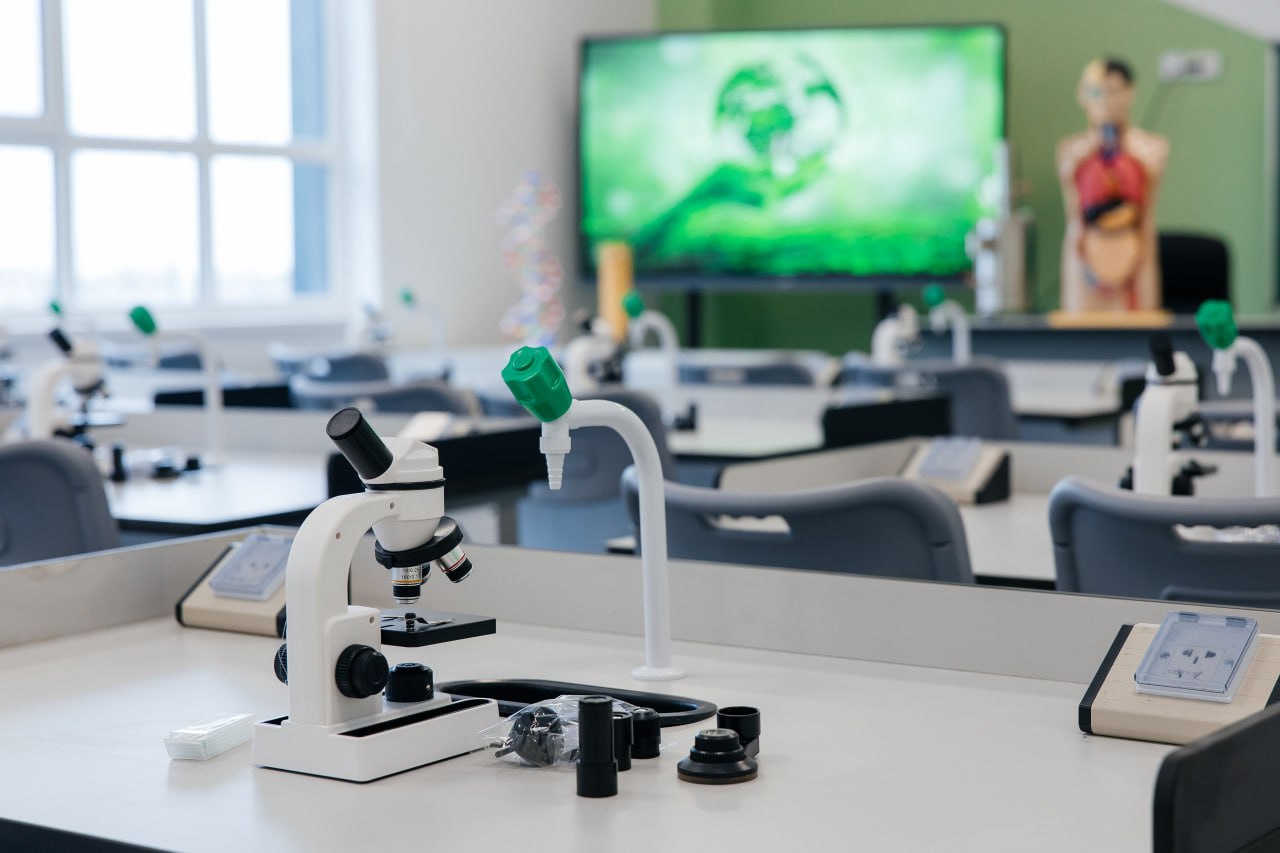 It is important to note that science is becoming a real driving force of production thanks to the new Law “On Science and Technological Policy” and the mechanism of 1% R&D from subsoil users. Private investments in science have reached 28.2 billion tenge, and the share of co-financing of business projects has grown to 31%. For example, scientists from Satbayev University launched the production of high-purity technical selenium at the facilities of “Kazakhmys Progress”, exporting more than 100 tons to China. Researchers from NU have developed technologies for Li-ion battery components with a market potential of $40 billion, and D. Serikbayev EKSTU has joined the Horizon Europe program project with a budget of 8 million euros.
For young scientists, 50 awards, 50 scholarships, 1,000 “Zhas Galym” grants, and 250 internships abroad are allocated. In addition, the housing problem of 760 young researchers has been completely solved: 622 received apartments under preferential “Otbas Bank” mortgage, and 138 scientists received housing free of charge in Almaty.
Culture, Creative Industries and Youth Policy
Creative hubs have been launched in all 20 regions. Today, 156.7 thousand people are employed in this sector as part of 46.4 thousand companies. Kazakhstan has risen in the WIPO ranking for creative goods and services from 65th to 61st place, and in film production — from 31st to 29th place. The Creative Industries Support Fund has been launched with the aim of increasing the sector’s contribution to GDP to 2% by 2029, exports to $115 million, the number of business entities to 60 thousand, and the number of employed people to 180 thousand.
In addition, work continues to promote historical and cultural heritage. A nomination “Ustyurt: Landscapes and Hunting Traps – Arans” has been sent to UNESCO, the reconstruction of the Kazakh National Drama Theater named after M. Auezov has begun, and a Comprehensive Plan for the Preservation of Heritage under the auspices of UNESCO and ICESCO for 2026-2028 has been approved. Tours of domestic groups have taken place in Singapore, Vienna, Beijing, and Antalya, and 60 apartments have been allocated to cultural figures in Almaty.
Conditions for a comfortable start in life are being created for 5.8 million young citizens of the country. Through the “Nauryz”, “Otau”, and “Nauryz Zhumysker” programs with a budget of 389.3 billion tenge, preferential housing has already been received by 14,635 young people. The fight against youth unemployment is being carried out through the “Jol Tap”, “Jumys Tap”, and “Talaptan” projects.
Kazakhstan is also strengthening its positions on the international arena. At the initiative of the Head of State Kassym-Jomart Tokayev, the UN has declared the current year the International Year of Volunteers. Today, 810 volunteer organizations operate in the country, uniting 300 thousand citizens, and Kazakhstani volunteers participate in UN missions in Kenya, Turkey, Thailand, Argentina, and China.
Tourism: Infrastructure Breakthrough, Accessible Skies and Regional Clusters
Today, the tourism industry is turning into a powerful driver of economic growth and Kazakhstan’s international positioning. A record number of foreign citizens visited the country — 15.7 million people, of which 11.1 million stayed in Kazakhstan for more than a day. The number of domestic tourists increased by 10%, reaching 8.6 million people. The volume of services of hotels and recreation centers grew by 17% and amounted to 350 billion tenge. Investments in the industry increased by 32.6% — to 1.256 trillion tenge. In total, since 2020, 573 investment projects have been implemented, which has expanded the country’s room stock by 25% — to 4,482 facilities.
To attract travelers, a visa-free regime has been opened for citizens of 84 states, and an electronic visa is available for 102 countries.
At the same time, international air communication connects Kazakhstan with 30 countries on 145 routes with a frequency of 812 flights per week. An “open skies” regime with the fifth degree of “air freedom” operates at 17 airports. In addition, three new airports are being built in Kenderli, Zaysan, and Katon-Karagay, the Arkalyk airport is being restored, and terminal and runway reconstructions are underway in Almaty, Urdzhar, Shymkent, and Pavlodar. Comprehensive plans have been developed for the development of the Shchuchinsk-Borovskaya resort zone, the “Mangystau” zone, and the Almaty mountain cluster.
The new law on support for the tourism industry canceled the привязка of guides to individual entrepreneurs, introduced regulation of visitor centers, and launched a “green corridor” for accelerated border crossing by tourist buses.
Sports: Mass Coverage, Sports Academy and Victories on the World Arena
Today, 44.5% of the population is covered by physical culture in the country. 34.6% of children and adolescents regularly engage in sports. Through the per capita financing mechanism with a budget of 50 billion tenge, over 228 thousand children aged 4 to 17 freely attend more than 7 thousand sections. Another 400 thousand young athletes train in 526 children’s and youth sports schools.
At the instruction of the President, the Kazakh National University of Sports has begun work to train specialists in coaching, sports medicine, analytics, and management. There are 26.5 thousand sports facilities operating across the country: 34 new facilities have already been commissioned this year, of which 21 are in rural areas, and the construction of another 87 facilities will be completed by the end of the year.
Mass sports provide a powerful base for high achievements on the international arena. At the XXV Winter Olympic Games, a historic first gold medal was won in figure skating, and the team took 19th place in the overall standings. At the XIV Winter Paralympic Games, a Kazakhstani athlete won gold and bronze in Paralympic sports: biathlon and cross-country skiing. A triumphant victory was achieved at the Australian Open in women’s singles, a world record was repeated at the World Cup in skeet shooting, and a Kazakhstani chess player won the prestigious super tournament Norway Chess Woman 2026. In total, since the beginning of the year, 152 medals have been won at 11 world championships and 26 Asian championships: 99 gold, 33 silver, and 20 bronze. In addition, Kazakhstan successfully hosted the World Cups in fencing, skeet shooting, boccia, the international IBSA JUDO GRAND PRIX ASTANA tournament, and Grand Slam stages in judo.
#Education #Healthcare #President's instruction #Social Security #Sports #Tourism



Stay updated about the events of the Prime minister and the Government of Kazakhstan - subscribe to the official Telegram channel
Subscribe