03 March 2026, 07:00
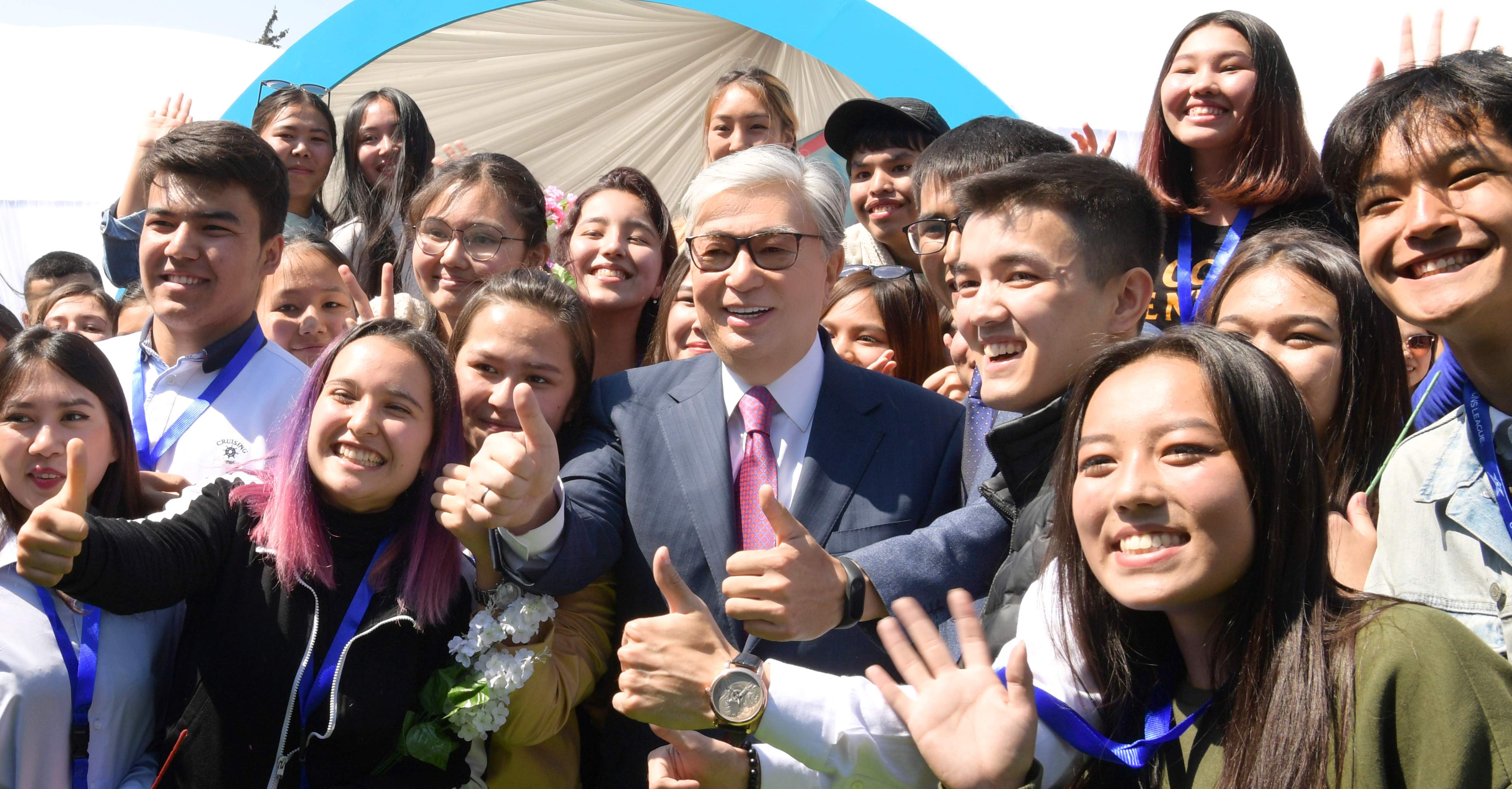 Seven years of Kassym-Jomart Tokayev’s presidency have become a period of deep and consistent transformation of Kazakhstan’s socio-economic and political development model. These years coincided with a complex global context — the pandemic, the slowdown of the global economy, inflationary and logistical shocks, geopolitical turbulence, as well as the need to eliminate internal economic and political imbalances formed over previous decades.
Despite objective difficulties, the President succeeded in ensuring stability and putting the country on a trajectory of confident growth.
The response to numerous challenges has been profound reforms aimed at the long-term sustainability of the state. President Tokayev is not prone to populism and does not pursue short-term results. The Head of State is pragmatically engaged in building a solid foundation for the country’s development, ensuring growth in citizens’ well-being and economic and political stability.
The results are evident. In 2025, global economic growth amounted to 3.3%, while in Kazakhstan GDP increased by 6.5%. The structure of the economy has changed. Whereas previously GDP dynamics were largely determined by external commodity market conditions, today, thanks to the systemic decisions of the Head of State, growth is increasingly driven by non-resource sectors and domestic demand.
Thus, the main contribution to economic growth was made by manufacturing, construction, trade, transport, and the services sector. Nominal GDP over seven years increased by 1.7 times: from $181.7 billion in 2019 to $305.9 billion in 2025. GDP per capita is also steadily growing — from $9.8 thousand in 2019 to $15 thousand by the end of 2025.
The volume of manufacturing over seven years increased by more than 2.5 times — from 11.5 trillion tenge in 2019 to 30.63 trillion tenge in 2025. The share of manufacturing in GDP rose from 11.4% to 12.7%, while the share of the extractive sector decreased from 14.5% to 12%.
Behind these figures stand dozens of new large plants and thousands of jobs. In Kostanay Region, plants for the production of KIA vehicles and cast iron have been launched; in Karaganda Region, production of household appliances and automotive tires has begun; in Atyrau Region — polypropylene production; in Almaty Region — tungsten concentrate production; in Pavlodar Region — production of components for railway equipment; in Shymkent — aluminum packaging production and precious metals processing, and many others.
Among the drivers of the country’s economic growth is the construction sector, demonstrating confident positive dynamics. In 2025 alone, more than 20 million square meters of housing were commissioned. These volumes exceed the total housing stock of two regional centers — Pavlodar and Kostanay.
According to IMF data, Kazakhstan entered the top 50 largest economies in the world, as well as the top five countries in terms of average annual economic growth rates. In the World Competitiveness Ranking, Kazakhstan ranked 34th. This confirms the strengthening of the country’s investment and business attractiveness.
The economy has ceased to be “single-event”: temporary fluctuations in the extractive sector no longer translate into macroeconomic shocks, which indicates a transition to a more mature and balanced development model.
The investment policy of President Kassym-Jomart Tokayev has become one of the key instruments of economic transformation. Over seven years, the volume of investment in fixed capital increased from 12.6 trillion tenge to 22.7 trillion tenge. At the same time, its structure has changed significantly: the main inflow of funds is directed to manufacturing, infrastructure, energy, logistics, and the agro-industrial complex.
The development of the agro-industrial complex remains a strategic priority, where food security, sector modernization, expansion of export potential, and improvement of rural living standards are interconnected.
Special attention is given to the development of irrigated agriculture and related infrastructure: the expansion of irrigated areas continues, with a target of reaching 2.5 million hectares in the near term.
Irrigation systems, grain elevators, processing facilities, and logistics chains are being modernized. Support for livestock breeding and deep processing of agricultural products is being strengthened, enabling increased production of goods with high added value.
Gross agricultural output nearly doubled over seven years — from 5.2 trillion tenge in 2019 to 9.8 trillion tenge in 2025; food production increased from 1.7 trillion tenge to 3.9 trillion tenge.
In accordance with the instruction of the Head of State, annual support for the sector has been increased to one trillion tenge, and the allocation of funds to agricultural producers is now carried out in advance. As a result, the quality of agricultural operations has significantly improved, and farmers in turn ensure high yields each year. Kazakhstan consistently ranks among the world’s largest suppliers of grain and flour, while agricultural exports continue to grow with an expanding geography — from the markets of Central Asia and Afghanistan to the Middle East, China, the European Union, and other destinations.
In the industrial sector, hundreds of projects across the country have been financed through the mechanisms of the Baiterek investment holding. Among them are passenger car production in Almaty; steel production by Qarmet in Karaganda Region; the Kazakhstan Electrolysis Plant in Pavlodar Region; the Ecoculture-Eurasia greenhouse complex in Turkestan Region; and Shin-Line ice cream production in Almaty Region. Over seven years, financing through Baiterek increased from 2.9 trillion tenge to 10.4 trillion tenge. Currently, with the holding’s financial support, 23 metallurgy projects worth 3.9 trillion tenge are being implemented; in mechanical engineering, 21 projects worth 610.6 billion tenge are at the financing stage; in the chemical industry, 11 projects worth 636 billion tenge are underway; and in the agro-industrial sector, 69 projects worth 415.9 billion tenge are being implemented.
The Head of State pays special attention to the development of micro and small businesses as a key source of employment and domestic growth. The contribution of small and medium-sized enterprises to GDP has reached 40.5%, and approximately 4.5 million people are employed in the sector — nearly half of the working-age population.
It should be noted that growth in small enterprise activity is observed not only in trade and services, but also in construction, transport, and processing industries. Small businesses are increasingly integrated into the supply chains of major projects. Administrative barriers are being reduced, and access to financing is expanding through interest rate subsidies, guarantees, and development institution programs.
Thousands of projects receive support annually, and the total volume of concessional financing for entrepreneurs in this sector amounts to hundreds of billions of tenge. At the same time, the digitalization of public services simplifies registration, reporting, and access to support measures.
Among the promising projects of the new investment cycle, special importance is attached to the multifunctional urban cluster Alatau City. The new city, being created on the President’s instruction, will become a growth point focused on the development of an innovative economy, high-tech industries, and educational and business infrastructure.
An important element of the long-term economic development strategy is the expansion of the mineral resource base through active geological exploration. In recent years, dozens of promising sites with projected resources of copper, nickel, coal, gold, and rare earth metals have been identified. By the end of 2026, the area of geological and geophysical exploration in Kazakhstan will reach 2.2 million square kilometers.
On the President’s instruction, during 2026–2028 the state alone will invest approximately 240 billion tenge in geological exploration, which is comparable to total expenditures over the previous two decades. Interest has already been expressed by foreign investors. All decisions will undoubtedly be made with due regard to national interests. The scale of this work forms the basis for long-term industrial growth.
The Head of State keeps the development of the country’s transit potential under special control. A key element is the Trans-Caspian International Transport Route (TITR), the so-called Middle Corridor, whose freight volume has increased fivefold over the past seven years.
The development of transit potential is impossible without modern railway infrastructure. Over seven years, approximately 1,000 kilometers of new railway lines have been built; 9,500 kilometers of track have undergone various types of repair, including 3,500 kilometers of capital repairs. The modernization of railway hubs in Shymkent, Aktobe, Karaganda, and along border routes has increased capacity and strengthened the country’s transit potential, ensuring regional connectivity, reducing logistics costs, and expanding the domestic market.
This year, we will complete the reconstruction of 124 railway stations that had not been renovated for decades and had fallen into serious disrepair.
Seaport capacities have been expanded, terminals modernized, and throughput increased. A key hub is the Khorgos dry port in Zhetisu Region, through which hundreds of thousands of containers pass annually. In Almaty Region and Zhetisu Region, a network of logistics centers has been established to ensure cargo consolidation and processing.
Over seven years, more than 25,000 kilometers of roads have been built and reconstructed; key corridors Center–South, Center–East, and West–East have been created, and the local road network has been significantly modernized across all regions.
The repair and construction of local roads, which for decades remained outside systematic financing, have produced a multiplier effect: reduced costs, increased trade, SME development, and improved regional investment attractiveness. In effect, the road network has become the framework of the country’s economic space. This work continues.
The total capacity of seaports now stands at 22 million tons, including approximately 15 million tons through the port of Aktau and 7 million tons through the port of Kuryk. By the end of 2025, cargo handling through the ports reached 8 million tons, while container traffic exceeded 90,000 units. For comparison, in 2024 this figure amounted to approximately 60,000 containers.
The aviation sector is also demonstrating steady growth: airports served 26 million passengers in 2023 and 31.8 million in 2025. Kazakhstan maintains air connections with more than 30 countries, operating over 600 flights on 130 routes. At the same time, airports are being modernized, new terminals are being built, and infrastructure is being upgraded. This year alone, four new airports will be commissioned in Katon-Karagai, Zaisan, Kenderli, and Arkalyk. The latter had not operated for more than 30 years and is being restored on the President’s personal instruction.
The development of transport infrastructure directly contributes to the growth of the tourism sector. Since 2022, inbound tourist flows have steadily increased following the post-pandemic recovery, driven by visitors from China, India, and the Persian Gulf countries. Kazakhstan has been included in Best in Travel 2025 by the international guidebook publisher Lonely Planet; Almaty has been highlighted by CNN and The New York Times; and Shymbulak has been named among the world’s top destinations by Condé Nast Traveler.
Taking this into account, the Head of State has emphasized the need for further development of the Almaty Mountain Cluster. The economic impact of the project is evident: every dollar invested in mountain infrastructure generates approximately five dollars for the resort economy and fifteen dollars for the tourism sector overall. Implementation of this large-scale project will create thousands of jobs and generate approximately 100 billion tenge in annual tax revenues. In accordance with the President’s directives, all work will be carried out in strict compliance with environmental standards at the level of global best practices.
Key decisions have been taken by the Head of State in one of the most complex areas — the rehabilitation of the energy and housing and utilities system. The large-scale work in these spheres represents not fragmented projects, but a systemic policy aimed at eliminating infrastructure constraints.
As the President emphasizes: “Energy and housing and utilities form the foundation of any country’s vital functioning.” At the beginning of the reforms, the wear and tear of generating capacities and heating networks in several regions had reached 70%, and in some regions exceeded 80%t. Large-scale accidents at energy facilities remain in public memory, when cities were left without heating in temperatures of minus thirty degrees.
The ongoing policy of tariff liberalization and attraction of investment has made it possible to move from emergency patchwork measures to systematic modernization of the sector.
Projects are being implemented to modernize combined heat and power plants in Karaganda, Ust-Kamenogorsk, Zhezkazgan, Ekibastuz, and Balkhash. Heating capacity is being upgraded in Almaty, Temirtau, and Ridder, while generating capacity is being expanded in Aktau, Atyrau, Uralsk, Taraz, and Ekibastuz (GRES-2). In addition, work is underway to create new generation sources in Aktobe, Atyrau, Ust-Kamenogorsk, Kokshetau, Kyzylorda, Semey, Taraz, Turkestan, and Ekibastuz (GRES-3). Programs for the reconstruction of heating and electricity networks have been launched in all regions.
As a result, for the second consecutive year the heating season has concluded without serious disruptions. The President consistently underscores that energy resilience is a matter of national security and that decisions must be made with a long-term horizon. Electricity production is steadily increasing: from 106 billion kWh in 2019 to 123.1 billion kWh in 2025. For comparison, the capacity commissioned over seven years is equivalent to one and a half years of electricity consumption by the city of Almaty and Almaty Region combined.
Overall, by the end of the first quarter of 2027, Kazakhstan will cease to be an energy-deficit country, achieving a surplus in electricity generation.
Particular attention should be given to the conversion of CHP-2 and CHP-3 in Almaty to natural gas. The full conversion of both plants will be completed by the end of the current year. These projects, costing several hundred billion tenge, will significantly improve the city’s environmental conditions.
For the formation of a long-term balance of generation capacity, the decision to develop nuclear energy has become especially important. The construction of a nuclear power plant will ensure reliable energy supply amid growing demand, reduce carbon intensity, and diversify sources of generation.
The project also serves as a foundation for further technological development, localization of production, and the training of engineering personnel. The initiative announced by the President, “Taza Kazakhstan,” has evolved into a nationwide movement: environmental campaigns, clean-up activities, tree planting, and the restoration of natural areas are taking place across the country with the participation of millions of citizens. The volumes of collected waste and planted trees are measured in hundreds of thousands of tons and millions of saplings. This initiative has changed the very approach to maintaining order and the appearance of cities and rural settlements.
Through his personal example, the President demonstrates the effectiveness of the principle “start with yourself,” emphasizing that not only the environment must be clean, but also a person’s intentions. This message has resonated widely with Kazakhstanis, especially the youth, becoming a large-scale movement.
Within the environmental agenda, the Head of State places particular emphasis on water security. On his instruction, a program is being implemented to construct 20 new reservoirs and reconstruct at least 15,000 kilometers of irrigation canals.
Water ecosystems have also come to the forefront — including the preservation of the Caspian Sea and the Aral Sea. The Kazakh Research Institute of the Caspian Sea has been established to study the key challenges related to this water body. Taken together, these measures form a comprehensive approach to environmental security and sustainable natural resource management.
In the global water agenda, glacier preservation is among the significant issues. According to expert forecasts, by 2100 the volume of glaciers in Central Asia will decline substantially. The President gives this issue the highest priority. At the international level, Kassym-Jomart Tokayev has put forward the Water Towers Partnership initiative aimed at systematizing support for glaciological science through the consolidation of efforts of global research centers to study and protect glaciers.
Profound reforms are also being implemented in social policy. The level of social expenditures remains high: in 2025, 9.3 trillion tenge were allocated from the republican budget for this purpose, representing 36.5% of total expenditures. At the same time, the philosophy of support has been revised: assistance must be targeted, fair, and motivating. Digital tools have enabled more accurate assessment of household conditions, reduced inefficient payments, and reallocated resources to priority areas.
In recent years, investment in human capital has increased significantly: spending on education and science has grown more than fivefold, and spending on healthcare and social services has increased 3.7 times. One of the key indicators is life expectancy, which has reached nearly 76 years, which is three years higher than in 2019.
Special attention is devoted to the younger generation. A major presidential initiative was the launch of the “National Fund – for Children” program. Under this program, annual allocations from the investment income of the National Fund are credited to the accounts of all young citizens of Kazakhstan. Upon reaching the age of 18, these funds may be used for education or housing improvement. Over three years of implementation, more than $2.5 billion has been credited to 7 million children.
On the instruction of the Head of State, the unified program “Children of Kazakhstan” for 2026–2030 has been approved, consolidating all existing and planned measures to ensure the rights and well-being of children in Kazakhstan. This program serves as the foundation of a sustainable state policy aimed at ensuring systematic protection of the rights and well-being of every child.
In addition, one of the priorities identified by the Head of State has been addressing deficiencies in school infrastructure. Over the past seven years, more than 1,300 new schools have been built, the number of unsafe and three-shift schools has been significantly reduced, and the material and technical base has been upgraded. Within the framework of the national project “Keleshek Mektepteri,” initiated by the President, 217 schools meeting the highest international standards were constructed nationwide during 2023–2025.
According to the international TALIS 2024 study, Kazakhstan entered the top five countries worldwide in terms of teachers’ satisfaction with their salaries. While this indicator stood at 39% in 2018, it reached 71% in 2024. Ninety-five% of Kazakhstani teachers report satisfaction with their profession.
The network of preschool institutions continues to expand, reaching 12,000 facilities. The number of medical institutions has increased to 830, and the number of physicians exceeds 83,000. According to the World Health Organization, Kazakhstan ranks among the top ten countries globally in the rate of maternal mortality reduction, with the indicator reaching a historic low. In 2021, on the President’s initiative, the “Ansagan Sabi” program was launched, providing 7,000 annual quotas for in vitro fertilization procedures. To date, 28,000 women have benefited from the program, resulting in the birth of 11,000 children.
The development of science and higher education is viewed by the President as a strategic foundation for technological and economic growth. Support for research universities and scientific centers is being strengthened, and research grant funding is being expanded.
Branches and representative offices of leading foreign universities are being opened, joint campuses and academic programs are being established, reducing educational migration and strengthening integration into the global academic environment.
The Head of State has set the task of integrating science with industry through the commercialization of research, the creation of science parks, and the development of innovation ecosystems within universities.
One of the priorities of the President’s policy remains the development of mass sports and accessible sports infrastructure. Hundreds of sports facilities have been built and modernized in the regions, a large-scale network of school and community sports grounds is in operation, and the rate of citizens’ regular participation in physical activity has reached 45%.
It is fundamentally important that part of the new social and infrastructure facilities is financed through recovered assets. This has made it possible to accelerate the resolution of pressing issues without increasing the burden on the budget.
In the healthcare sector, 183 facilities have been constructed using recovered funds, enabling faster implementation of the national project for the modernization of rural healthcare. As a result, 655 new primary healthcare facilities are now operating in rural settlements across the country under this project. In addition, these funds are being used to construct major medical centers, including a multidisciplinary hospital and a Hematology Center in East Kazakhstan Region, an emergency medical station in Mangystau Region, and a surgical and intensive care unit at the oncology dispensary in Karaganda Region.
Using funds returned to the national economy, 227 water supply facilities have been reconstructed. Resources are also being directed toward the construction of schools, sports facilities, utility infrastructure, and other socially significant projects.
A clear example is the commissioning of the multifunctional Kokshe Arena sports complex and a new youth sports school in the village of Zerenda in Akmola Region, a kindergarten in Petropavlovsk, and a music school in Turkestan Region. Such facilities have been built in every region of the country.
It should be noted that the asset recovery policy is implemented strictly within the legal framework and does not affect lawful entrepreneurial activity.
The transparent and targeted use of funds contributes to a predictable business environment and strengthens investor confidence, serving as an important factor in enhancing investment attractiveness.
Significant changes have also taken place in the system of public administration. Budgetary and tax policy is being consistently stabilized, mechanisms for medium-term planning have been strengthened, and tools for evaluating the effectiveness of state programs have been introduced. The budget process is oriented toward results and development priorities, linking expenditures with socio-economic objectives.
The need for tax reform had long been evident, and the adoption of the new Tax Code has addressed accumulated challenges. The tax reform aims to create a transparent and fair system, reduce opportunities for artificial business fragmentation, and establish conditions for honest and fair competition.
On the instruction of the Head of State, the tax service is transitioning to a service-oriented model of interaction with businesses and citizens. The digitalization of tax services, risk-based oversight, and automation of reporting reduce the burden on compliant taxpayers, combining fiscal sustainability with a convenient and predictable environment.
In all spheres of state and public life, the principle articulated by Kassym-Jomart Tokayev “Law and Order” has been placed at the forefront.
This principle serves as a fundamental element in building a Just Kazakhstan, a country where public security and the rule of law are unconditionally ensured.
The protection of the rights and legitimate interests of citizens, society, and the state remains a key priority. Measures are being implemented to modernize the law enforcement system and enhance transparency in its operations.
Advanced digital solutions are being introduced, the practice of service-oriented policing is being developed, and human resources capacity is being strengthened. On the instruction of the Head of State, digital transformation is underway. Since 2019, Kazakhstan has progressed from the digitization of individual services to a scalable digital model of the country. An important mechanism within this infrastructure is the Smart Bridge integration platform, which enables data exchange between government bodies and private services and forms an open ecosystem for digital business models and fintech solutions. Digitalization has enabled the state to provide services and support to citizens in a proactive format.
The economic impact of digitalization is reflected in greater efficiency of budget expenditures and more precise targeting of social support. Kazakhstan ranks 24th out of 193 countries in the United Nations EGDI index and is among the top ten global leaders in the development of online services.
Building on these achievements, the International Artificial Intelligence Center Alem.ai has been established at the President’s initiative and is already becoming a hub for researchers, startup founders, and innovators.
As is well known, the Head of State has declared 2026 the Year of Digitalization and Artificial Intelligence. The Government is preparing the Digital Qazaqstan strategy aimed at introducing advanced technologies and artificial intelligence across all sectors of the economy and public administration.
Seven years of the presidency of Kassym-Jomart Tokayev have marked a transition from crisis response to systemic development: the economy has become more diversified, investments more resilient, infrastructure more reliable, and social policy more targeted.
The established foundation allows Kazakhstan to look confidently to the future, relying on an institutionally built model and long-term priorities.
Today, Kazakhstan stands at a historic stage of its development. At the initiative of the Head of State, following broad public discussion and with consideration of the views of expert and academic communities and representatives of all segments of society, a draft of a fundamentally new Constitution has been prepared. A distinctive feature of the draft Basic Law is its progressive spirit and forward-looking orientation. It reflects the aspirations of the people and clearly demonstrates the commitment of the highest official of the state, President Tokayev, to lay a solid foundation for the long-term sustainable development of the Republic of Kazakhstan and the prosperous and secure life of many generations of citizens.
I am confident that the citizens of our country will make the right choice, support the initiative of the Head of State, and contribute to building a Strong, Just, and Prosperous Kazakhstan.
Olzhas Bektenov
Prime Minister of the Republic of Kazakhstan
Published in the Kazakhstanskaya Pravda newspaper.
#Olzhas Bektenov #Economy #Education #Employment #Healthcare #Manufacturing industry #Social Security



Stay updated about the events of the Prime minister and the Government of Kazakhstan - subscribe to the official Telegram channel
Subscribe