19 January 2026, 08:28
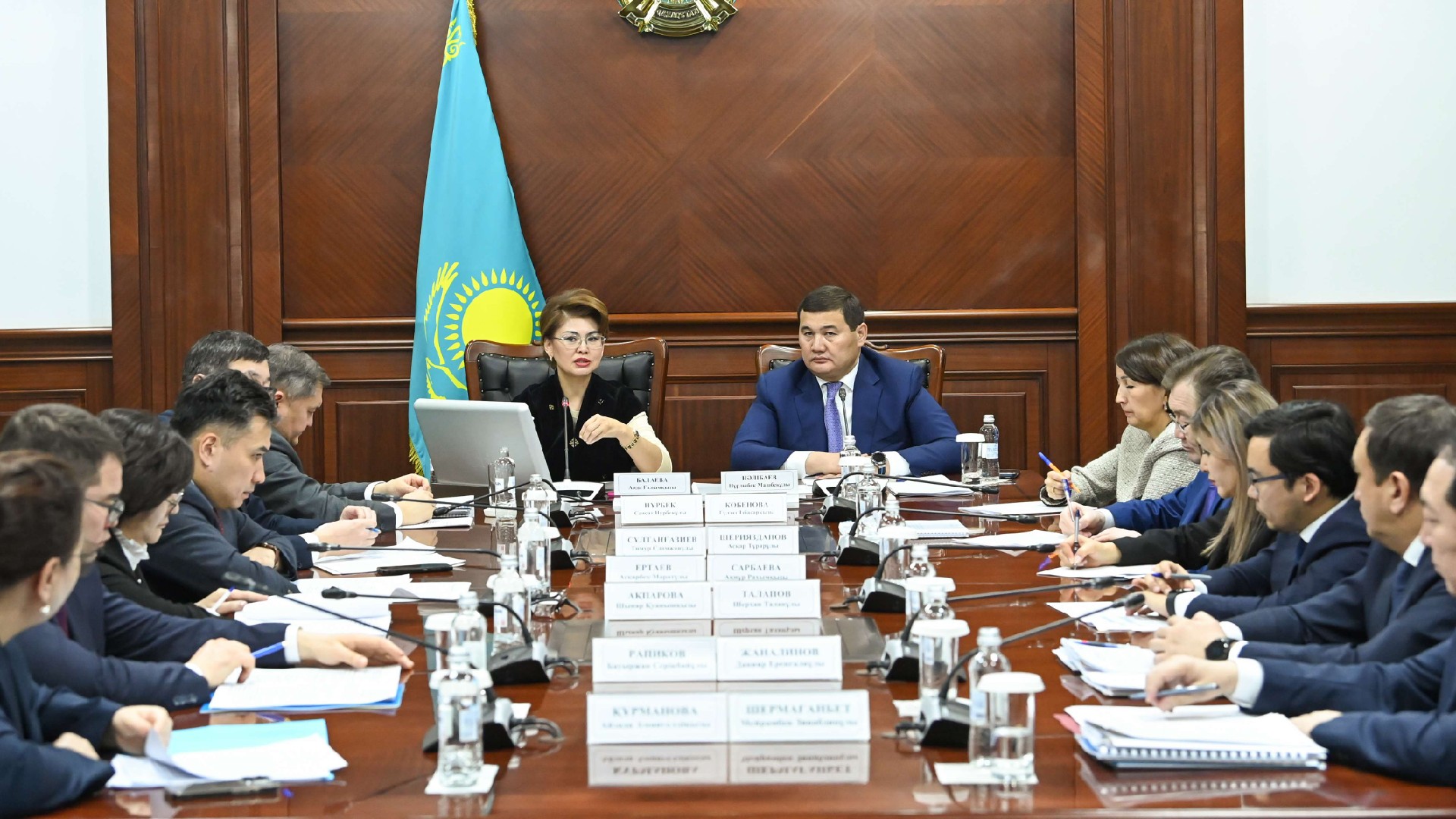
Under the chairmanship of Deputy Prime Minister – Minister of Culture and Information Aida Balayeva, issues related to the development of the social sector of the Kyzylorda region were reviewed in Kyzylorda. The meeting was attended by Akim of the region Nurlybek Nalibayev, as well as representatives of relevant ministries.
Participants held an in-depth discussion on the potential of higher education and science in the region. Three universities operate in the region, with around 20 thousand students enrolled. Over the past three years, the number of students has increased by more than 21%, which is an important indicator of sustained demand for higher education among young people.
Minister of Science and Higher Education Sayasat Nurbek outlined priority areas of demand for specialists and emphasized the need to synchronize regional needs with the educational order and practice-oriented training.

“Today it is important to move away from a formal approach to training specialists. Akimats must plan workforce training in advance and work with the educational order in a targeted manner. Regional support mechanisms are needed, including akim grants and regional grants. If certain programs do not produce results and do not meet the needs of the economy, decisions must be made, including the optimization of individual faculties,” Aida Balayeva emphasized.
The discussion then moved to the healthcare sector. According to the ministry, the region continues to develop primary healthcare and district hospital infrastructure, construct new facilities, and upgrade diagnostic capacities. At the same time, a number of problematic issues requiring targeted solutions were identified: increasing the effectiveness of primary healthcare and prevention, improving the quality of patronage services for families with children, ensuring objectivity of screenings and early detection. Among the examples cited were limitations in the operation of stroke services due to insufficient diagnostic capabilities in certain district hospitals.
“We need to shift the focus: not to chase disease, but to engage systematically in prevention. First, this means screenings and early detection without formalism. Second, service quality. Third, informational work with the population. At the same time, control must be strict: we allocate funds, but we must see how they are spent and what results people receive. Government funds are the people’s funds,” the Deputy Prime Minister said.
The Ministry of Education presented an analysis of management quality and learning outcomes. Among the problematic areas identified were discrepancies between internal and external assessments of knowledge. The report also noted that a number of institutions were closed due to non-compliance with qualification requirements, which necessitates stronger quality control, targeted methodological support for schools, and digital transformation of the sector. As regional priorities, projects aimed at developing schools in Baikonur were highlighted, as well as the creation of a specialized “Artificial Intelligence” school based on IT Lyceum School No. 3 in Kyzylorda.
First Deputy Minister of Labor and Social Protection of the Population Askarbek Yertayev reported on employment administration and increasing the effectiveness of support measures. In particular, it was noted that changes to the rules governing subsidized jobs require additional fine-tuning and coordination with regions, including employer requirements and support practices through digital tools.
A separate topic was the promotion of cultural tourism in the region, which is rich in historical and cultural heritage sites. The meeting also discussed the tourism potential of the Baikonur Cosmodrome.
Work related to historical and cultural heritage was identified as another important area. According to the Ministry of Culture and Information, 413 cultural and archival institutions operate in the region, and new facilities have been commissioned in recent years, enabling consistent modernization of infrastructure and expanded access to services at the local level. At the same time, under standard network norms, there remains a need for further expansion of infrastructure so that the availability of cultural institutions meets minimum standards.
Aida Balayeva instructed to strengthen systematic work across key development areas of the region. Particular emphasis was placed on aligning workforce training with real economic needs, reviewing ineffective educational programs, and maintaining constant oversight of ideological and educational work in schools and universities, starting from primary education.
In the field of science, the task of integrating science and production was emphasized so that scientific developments directly enhance industrial efficiency. Instructions were also given to intensify work with the uninsured population within the Mandatory Social Health Insurance system, strengthen prevention and screening, counter misinformation about vaccination, improve the quality of services in polyclinics, and exercise strict control over issues related to orphan diseases, palliative care, and targeted use of budget funds.
In the social sphere, particular attention was drawn to the need to analyze youth unemployment, develop a clear support action plan, and involve persons with disabilities in employment through creative and craft-based activities.
In education, instructions were given to improve the quality of primary education, raise the level of teacher training, and introduce AI as a tool to assist teachers while simultaneously developing critical and creative thinking in children.
In the tourism sector, the task was set to submit proposals to the development concept, strengthen infrastructure and information support, develop cultural tourism, form an events calendar, and promote regional tourism brands, including the creation of unique festivals.
In conclusion, the importance of active informational work at both regional and national levels was emphasized, with a focus on demonstrating tangible results, while maintaining an unwavering focus on the main goal – national development and improving the social well-being of the population.



Stay updated about the events of the Prime minister and the Government of Kazakhstan - subscribe to the official Telegram channel
Subscribe